

Trip Info
-
Tea House & Tented Camp
-
Included (Guide & Staff)
-
Trekking & Climbing Permits Included
-
6,017m
-
Kathmandu
-
Spring & Autumn
-
Kathmandu
-
Professional Climbing Guide
-
Airport Pickup & Drop Included
-
30 Days Before Start
Phari Lapcha Peak Climbing-17 days
Phari Lapcha is one of those peaks that earns its reputation. Rising sharply above the Gokyo valley in the Khumbu Himalaya, this technical summit demands genuine climbing skill and rewards it with one of the most spectacular ridge-top views in Nepal. The approach alone, winding past Gokyo’s famous emerald lakes and up into glaciated terrain, makes this expedition unlike anything a trekker encounters at lower elevations. This is a route for people who want to push their limits in one of the world’s most iconic mountain landscapes.
The journey begins in Kathmandu with a sightseeing day among ancient temples and centuries-old courtyards, then moves quickly into the Khumbu via a short flight to Lukla. From there, the trail climbs through Namche Bazaar, branches off the busy Everest Base Camp route toward the quieter Gokyo valley, and eventually pushes above the permanent snowline. Each stage of the approach builds altitude gradually and intentionally, so your body has time to adjust before the real climbing begins.
Nepal Holiday Treks designs this itinerary for climbers who want both the challenge of a technical Himalayan peak and the cultural richness of the Khumbu region. The route passes through Sherpa villages where life has changed very little despite the global traffic of mountaineers, and the views from Gokyo Ri on the way in provide a rare, close-range look at four of the world’s highest peaks. Reaching the summit of Phari Lapcha is a hard-earned achievement, and the descent back through the valley feels like a quiet celebration.
Highlights
- Gokyo Lakes area
- Scenic Lukla trekking
- Acclimatization at Namche Bazaar
- Climbing training included
- Experience Sherpa culture
- Explore Tengboche Monastery
- Glacier travel & rope climbing experience
Itinerary
Tribhuvan International Airport is compact and busy, and arriving here for the first time is an immediate reminder that Kathmandu operates entirely at its own pace. Once you clear immigration and collect your bags, your guide or a Nepal Holiday Treks representative will be waiting in the arrivals hall to escort you to your hotel in the city. Most accommodations are situated in Thamel, the lively traveler’s hub that buzzes with teahouses, gear shops, and the smell of dal bhat drifting from open kitchens. The rest of the day is yours to settle in, exchange currency, and start getting a feel for the city before the expedition begins. If the evening allows, a short walk through Thamel’s narrow alleys is a good way to shake off any flight fatigue and absorb the unmistakable energy of Kathmandu.
Kathmandu holds more UNESCO World Heritage Sites within its valley than almost anywhere else in Asia, and a single day spent moving between them gives real context to the culture you will encounter throughout the trek. The morning typically begins at Pashupatinath Temple on the banks of the Bagmati River, where Hindu cremation rituals take place openly and sadhus in saffron robes sit in meditative stillness along the ghats. From there, the golden stupa of Boudhanath rises above the eastern rooftops, its painted eyes gazing outward in all four directions as pilgrims complete their circumambulations below. In the afternoon, Swayambhunath, commonly called the Monkey Temple, offers a hilltop panorama of the entire Kathmandu valley with the city sprawling outward beneath a haze of incense smoke. This day grounds the expedition in something deeper than logistics.
The short flight from Kathmandu to Lukla is an experience in itself. The small aircraft threads through valleys and gradually reveals a landscape of snow-dusted ridges before dropping into Tenzing-Hillary Airport, where the runway ends at the edge of a cliff and every landing feels slightly theatrical. From Lukla, the trail descends gently into the Dudh Kosi river valley, crossing a series of suspension bridges strung with prayer flags that flutter above the rushing glacial water below. The path moves through mixed forest and small Sherpa settlements before leveling out at Phakding, a compact village with teahouses clustered along the riverbank. It is a gentle introduction to the Khumbu trail, a good day to check your pack, test your boots, and start noticing the rhythm of walking in this part of the world.
The trail from Phakding to Namche Bazaar is one of the most memorable stretches in all of Himalayan trekking. You will cross the Hillary Suspension Bridge, swaying high above the Dudh Kosi gorge, and pass through the entrance gate of Sagarmatha National Park, where rangers check permits against a backdrop of dense forested hillside. The first clear view of Everest appears briefly from a ridge above the treeline before Namche itself comes into sight, a horseshoe-shaped market town built into the steep slope of the mountain. The final climb to Namche is relentless, gaining significant elevation in a short distance, but the reward is arriving in the most vibrant settlement in the entire Khumbu. Namche is a place where Sherpa culture, global mountaineering, and Himalayan commerce coexist in a single compact neighborhood of stone buildings and colorful lodge signs.
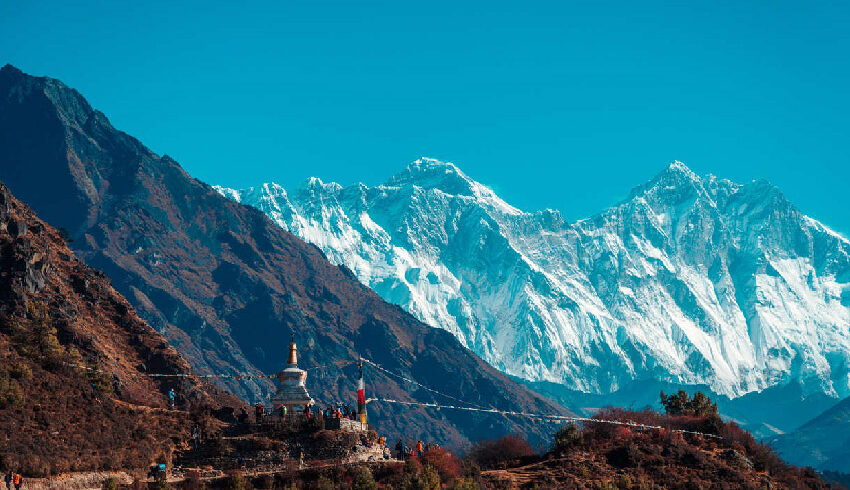
Acclimatization days are not wasted days. In Namche, there is more than enough to fill several hours without any effort at all. The Saturday market draws traders and yak herders from surrounding villages, and the lanes above the main square are lined with expedition outfitters, bakeries, and coffee shops that could hold their own in any city. A recommended acclimatization hike leads up to the Everest View Hotel, where the terrace looks directly across to Everest, Nuptse, Lhotse, and Ama Dablam arranged together in a single remarkable frame. Walking uphill and returning to sleep at a lower elevation is exactly the kind of stimulus your body needs at this stage, and Namche provides the ideal setting for it. Take the morning slowly, walk in the afternoon, and eat well.
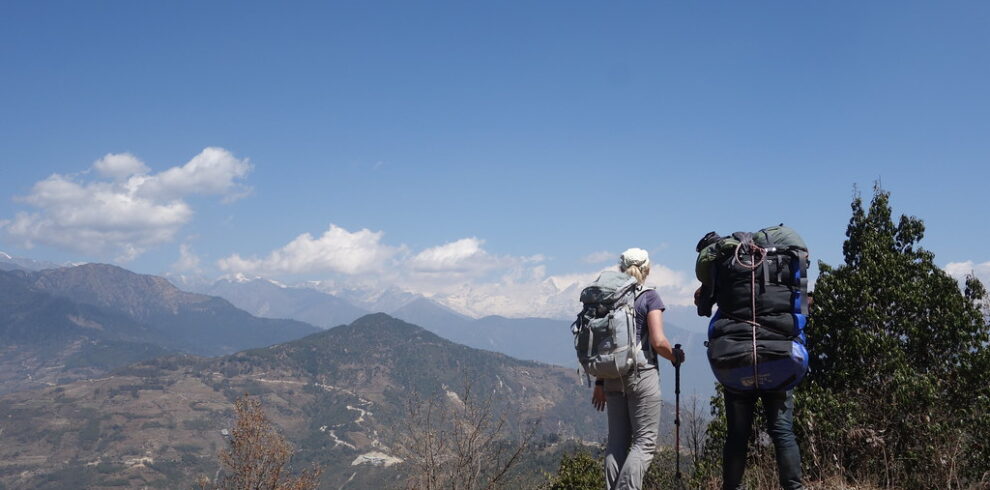
Leaving Namche, the trail splits away from the busy Everest Base Camp route and heads northwest into noticeably quieter terrain. The path climbs through a band of rhododendron and juniper forest, then breaks out onto open hillside with sweeping views across the Khumbu valley toward Thamserku and Kangtega. Yak caravans are a common sight on this stretch, the animals moving steadily along the stone-paved trail with loads of supplies headed for higher camps and lodges. The village of Dole sits on a broad grassy shelf above the treeline, exposed to the wind but surrounded by a landscape that feels genuinely remote. This section of the route sees far fewer trekkers than the main trail below, and that solitude becomes its own reward.
The trail from Dole climbs through Lhabarma and Luza before reaching Machhermo, a small settlement perched on a high ridge with clear views of the Cho Oyu massif beginning to dominate the skyline to the north. Beyond Machhermo, the terrain opens into a broad glacial valley where the lateral moraine of the Ngozumpa Glacier stretches across the landscape in a long, rubble-strewn arc. Gokyo Lake appears suddenly at a bend in the trail, its water an almost unnatural shade of turquoise set against grey rock and permanent snow. The lake is sacred to the local Sherpa community and surrounded by a stillness that feels genuinely earned after days of walking at altitude. Gokyo village, a small cluster of lodges on the lakeshore, will be your base for the next two nights.
Gokyo Ri is not technically demanding but it is steep, and the thin air at this elevation means the ascent deserves full attention and a deliberate pace. The trail zigzags up a grassy and rocky slope behind the village, climbing through a series of switchbacks that grow more demanding as the summit ridge draws closer. From the top, the view is extraordinary in the literal sense: Everest, Cho Oyu, Lhotse, and Makalu, four of the world’s six highest peaks, are all visible from a single vantage point. The Ngozumpa Glacier snakes below in a wide river of fractured ice and debris, and the string of Gokyo Lakes shimmers in the valley to the south. After returning to the lakeshore, the afternoon is free to rest, prepare climbing gear, and absorb the fact that tomorrow the real ascent begins.
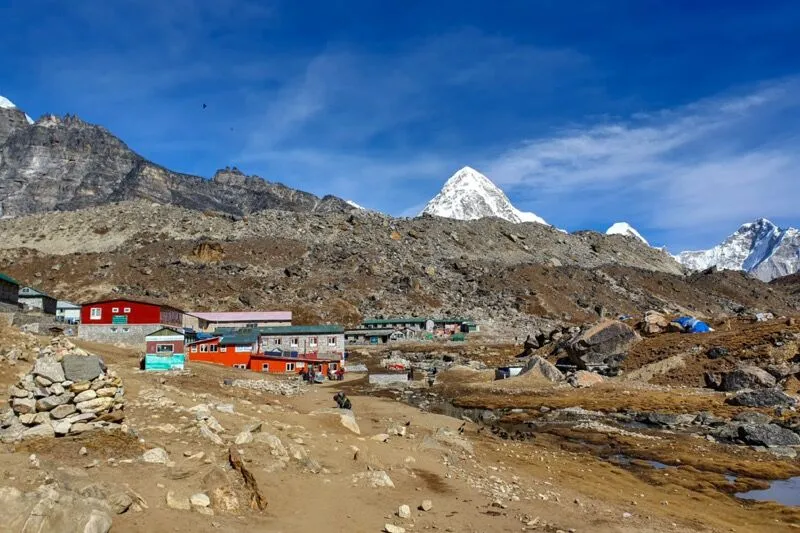
The trail from Gokyo toward Phari Lapcha Base Camp leaves the lakeshore and pushes into higher, more austere terrain where signs of other trekkers largely disappear. The path crosses rocky moraine fields left by retreating glaciers, where the ground is uneven and requires careful footing at every step. As the valley narrows, the angular silhouette of Phari Lapcha comes fully into view, its steep rock and ice faces rising in sharp contrast to the open sky above. Base camp is established on a relatively flat section of moraine, sheltered from the worst of the wind and positioned directly below the peak’s approach routes. Your climbing team will spend the afternoon sorting equipment, reviewing the ascent plan, and resting in preparation for the move to high camp the following morning.
The move from Base Camp to High Camp is where the expedition shifts decisively from trekking into climbing. The terrain steepens almost immediately, with sections of fixed rope installed by your guides to protect the most exposed passages on the lower approach. Ice axes are in hand from early in the ascent, and crampons bite into firm snow and ice as the angle increases above the glaciated lower slopes. High camp is a wind-scoured ledge where tents are pitched with care, anchored securely against gusts that roll off the upper ridges through the night. The evening is spent doing final equipment checks, eating a solid hot meal, and getting as much rest as possible before an alpine-style start in the early hours of the following morning.
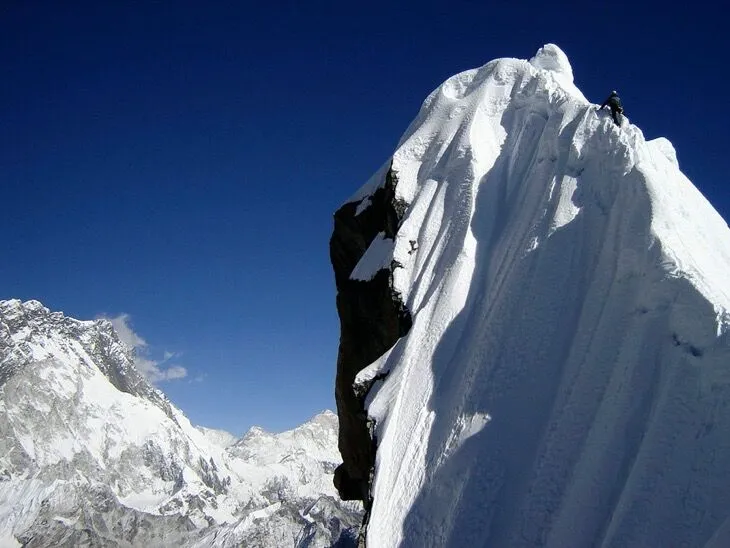
Summit day begins well before dawn, headlamps cutting narrow beams of light across the snow as the climbing team moves upward in the cold silence of early morning. The upper route on Phari Lapcha involves mixed terrain, patches of exposed rock interspersed with steep ice slopes that demand precise footwork and a steady, unhurried use of the fixed lines. The summit ridge is narrow and airy, and when you arrive at the highest point, the panorama that opens up spans the full breadth of the Khumbu Himalaya. Everest, Cho Oyu, Makalu, and dozens of unnamed peaks fill every direction, the kind of view that is genuinely difficult to describe to anyone who has not stood there themselves. The descent to Base Camp is careful and deliberate, each section of fixed rope managed methodically, and arriving back at camp in the afternoon brings a quiet, deep satisfaction.
After the intensity of the summit push, the walk back toward Machhermo feels almost restorative by comparison. The trail retraces familiar ground across the moraine and back into the upper reaches of the Gokyo valley, where the landscape gradually softens as elevation decreases. Your legs may still register the effort of the previous two days, but the air gets noticeably thicker with every descent, and the body responds gratefully. Machhermo is a small, quiet settlement with lodges and teahouses that feel genuinely welcoming after nights on the upper mountain. It is a good evening to eat a proper hot meal, sleep at a comfortable elevation, and let the recovery begin in earnest.
The long descent from Machhermo back to Namche covers some of the most visually varied terrain of the entire route. The trail passes through Dole and drops steadily through the transitional zone where scrubby highland vegetation gives way to the denser rhododendron and juniper forest below. As Namche comes back into view, it feels almost like returning to civilization, with its stone lodges, bakeries, and the faint sound of music drifting up from the lower lanes. A hot shower, a proper coffee, and a meal from one of Namche’s many restaurants are very reasonable rewards after a summit. Nepal Holiday Treks schedules this as a longer walking day, giving the team enough time to arrive comfortably and rest well before continuing the descent.
The trail from Namche back to Lukla is all descent, following the Dudh Kosi valley south through forest and back across the suspension bridges that marked the very beginning of the journey. The Khumbu peaks that have been constant companions for nearly two weeks slowly disappear behind the ridgeline as the trail drops into deeper forest canopy. Lukla arrives in the late afternoon with its familiar sounds: diesel generators, the chatter of trekkers in various states of exhaustion, and lodges doing brisk business along the main street. It is worth spending part of the evening walking the short strip of town and reflecting on the route you have just completed. An early night makes good sense, given the morning flight ahead.
Mountain flights operate on weather rather than clocks, and Lukla mornings can be unpredictable with low cloud rolling in from the valleys below. Most flights depart early, so breakfast tends to be brief and the walk to the airport is mercifully short. The flight back to Kathmandu retraces the aerial route from Day 3, though looking out the window this time carries a different weight: the mountains below are ones you have walked through and climbed. Landing back at Tribhuvan and driving through the city’s familiar traffic to the hotel is a welcome transition back to lower ground. The afternoon is free, and Thamel’s cafes and restaurants are well-suited for a celebratory meal.
A free day in Kathmandu after a successful expedition is genuinely pleasant, and the city offers more than most climbers expect. The medieval courtyards of Patan Durbar Square, the pottery-making lanes of Bhaktapur, and a handful of excellent restaurants serving everything from Nepali thali to wood-fired pizza are all within easy reach. Shopping for souvenirs is best done around the Boudhanath stupa, where local artisans sell thangka paintings, singing bowls, and hand-knit woolen goods at reasonable prices. If your legs still have something in them, a walk around the outer kora of Boudhanath is one of the more grounding experiences Kathmandu offers. This day also serves as a practical buffer in case the Lukla flight was delayed or the summit push required an extra night on the mountain.
The final morning in Kathmandu is usually quiet and unhurried. Bags that were left in hotel storage get repacked, any last purchases are tucked away, and there is just enough time for a final cup of tea before the transfer to the airport. Tribhuvan International handles a steady flow of international departures throughout the day, and the Nepal Holiday Treks support team will ensure you reach the airport with plenty of time to spare. International check-in at TIA can take longer than expected during peak travel periods, so arriving well ahead of your departure time is genuinely good advice. The climb is over, but the Himalaya has a way of staying with you long after the plane lifts off.
Includes
Cost Includes
- Airport pickup & drop
- Lukla flight (round trip)
- Professional climbing guide
- Accommodation during trek
- Tented camp at Base Camp
- All meals during trek
- Climbing training
- Safety equipment
- First aid support
- Support staff
Cost Excludes
- International airfare
- Personal climbing gear
- Travel insurance
- Personal expenses
- Tips for guide & porter
- Extra accommodation
- Emergency rescue
FAQs
Phari Lapcha is a technical peak that requires prior experience with crampons, ice axes, and fixed-rope systems. Climbers without glacier or high-altitude experience should complete an introductory peak before attempting this summit.
Spring (March to May) and autumn (September to November) offer the most stable weather windows for this climb. Conditions outside these seasons make the upper routes considerably more hazardous and unpredictable.
Yes, an official climbing permit issued by the Nepal Mountaineering Association (NMA) is required. Nepal Holiday Treks handles all permit arrangements as part of the expedition package.
Personal equipment includes crampons, an ice axe, a climbing harness, a helmet, and a layering system rated for sub-zero temperatures. A detailed gear checklist is provided after booking confirmation.
The trail to base camp follows established Gokyo valley paths before crossing into rough moraine terrain that requires good balance and steady footing. It is a strenuous high-altitude trek but does not require technical climbing skills until above base camp.