

Trip Info
-
Tea House & Tented Camp
-
Included (Guide & Staff)
-
Trekking & Climbing Permits Included
-
6,340m
-
Kathmandu
-
Spring & Autumn
-
Kathmandu
-
Professional Climbing Guide
-
Airport Pickup & Drop Included
-
30 Days Before Start
Ombigaichen Peak Climbing – 15 Days
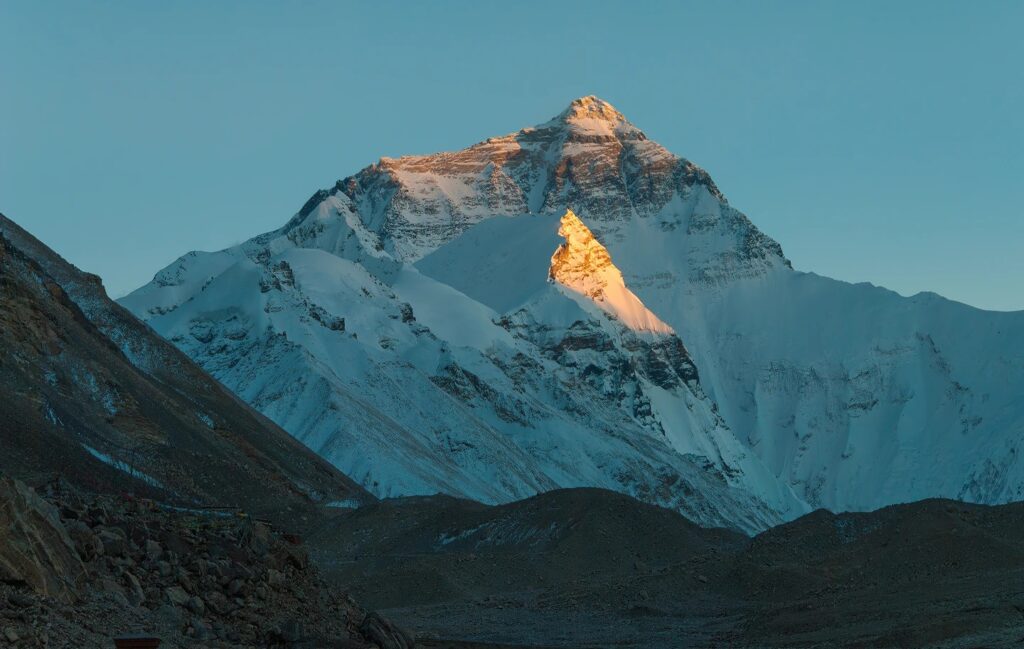
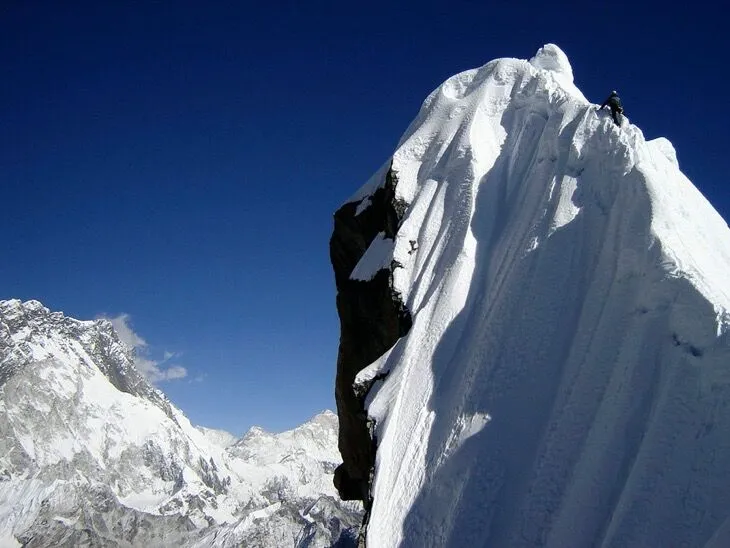
Ombigaichan Peak at 6,340m is one of the Khumbu’s quieter technical objectives, positioned in the shadow of Ama Dablam where the crowds of the standard Everest trail thin out and the terrain gets serious. What makes it genuinely compelling is the company it keeps: Makalu’s pyramid, the Lhotse-Nuptse wall, and Ama Dablam’s hanging glacier are all within eyeline from the upper slopes. The approach follows the celebrated Everest corridor through Namche Bazaar and Tengboche before branching off onto a narrowing valley that most trekkers never enter. For climbers wanting a real high-altitude summit without the permit queues of the commercial giants, Ombigaichan delivers.
The route threads through some of the most rewarding trekking terrain in Nepal Sherpa villages with stone-walled potato fields, the monastery meadow at Tengboche where Ama Dablam dominates the skyline, and the raw moraine flats of Ama Dablam Base Camp before the final push to your own camp below the peak. Each stage builds altitude deliberately, which is exactly what your body needs before glacier travel and fixed-rope work on summit day. The climb involves crampons, an ice axe, and careful movement on steeper ground, but it is within reach of any fit trekker with proper mountaineering preparation.
Nepal Holiday Treks plans this 15-day itinerary with experienced high-altitude guides, realistic daily stages, and a built-in reserve day to account for mountain weather. The trip suits fit adventurers who have basic mountaineering training and are looking for a genuine summit experience rather than a supported walk to a high camp. Ombigaichan gives you the Khumbu in full from Lukla’s tilted runway to a summit dawn over some of the world’s most recognised peaks.
Highlights
- Makalu pyramid, the Lhotse-Nuptse wall and Ama Dablam
- Scenic Everest region trekking
- Acclimatization at Namche & Dingboche
- Climbing training included
- Experience Sherpa culture
- Explore Tengboche Monastery
- Glacier travel & rope climbing experience
Itinerary
Your journey to Ombigaichan begins the moment you step off the plane at Tribhuvan International Airport, where the warm valley air and a distant ring of forested hills signal a world far removed from wherever you’ve come from. A representative from Nepal Holiday Treks meets you at the arrivals hall and handles the transfer directly, so there’s no scramble for taxis or navigating the capital’s notoriously busy streets alone. The drive to your hotel passes through Kathmandu’s layered streetscape, with fruit vendors, weaving motorcycle traffic, and crumbling temples wedged between modern shopfronts, giving you an immediate feel for how this city operates. That evening, the team walks you through a full expedition briefing covering route logistics, gear checks, emergency protocols, and a clear picture of what each day ahead involves. It is a relaxed start, but a purposeful one.
The early morning flight from Kathmandu’s domestic terminal to Lukla is one of the more memorable moments of any Khumbu expedition. The small aircraft threads through cloud and valley walls before touching down on a short uphill runway with a sheer mountain wall at one end. Once you’ve collected your kit at Lukla, the trail drops down through silver fir forest and along the Dudh Koshi River toward Phakding, the sound of churning white water staying with you across a series of suspension bridges hung with prayer flags. The path is well-graded, and the walking is gentle, a welcome ease into the days that follow. Phakding itself is a quiet cluster of stone lodges and tea gardens strung along the riverbank, calm and unhurried in the afternoon. You stay at Tribeni Lodge, a comfortable enough base for the short rest before the longer push toward Namche.
The trail out of Phakding follows the river valley through rhododendron forest, crossing high suspension bridges where the gorge narrows and the roar of water rises from far below. After passing the national park entry point at Monjo, the path begins its serious work, a long, steep climb through dense forest that tests the legs before eventually opening onto a horseshoe-shaped hillside where Namche Bazaar suddenly comes into view. It is one of those arrival moments that actually delivers on the anticipation: a proper mountain town of bakeries, gear shops, and guesthouses stacked in terraces above a steep bowl, buzzing with the particular energy of an expedition hub. On clear days, the first glimpse of Everest’s summit appears above the ridge to the north, framed cleanly between the valley walls. Namche rewards the climb, and then some.
A full day at Namche is well-spent rather than wasted. Your blood is quietly adapting to reduced oxygen, and this process works best when you keep moving at a gentle pace rather than resting in a lodge bed. The standard acclimatisation hike climbs to the ridge above town near the Everest View Hotel, where morning light catches the faces of Everest, Lhotse, Nuptse, and Ama Dablam in a single unobstructed panorama. The Sherpa Culture Museum nearby offers a grounded look at how these mountain communities have lived, traded, and climbed for generations more absorbing than you might expect before you’ve had a chance to see the villages themselves. Back in town, the weekend market draws traders from surrounding settlements and is worth wandering through even if you’re not buying anything. By evening, you’ve moved your legs, stretched your lungs, and seen exactly what this region looks like from above.
The trail to Khumjung leaves Namche’s market noise behind quickly, climbing through juniper and rhododendron scrub onto an open ridge with long sightlines toward Khumbila, the sacred peak that sits above and watches over this entire valley. Khumjung is one of the oldest Sherpa settlements in the Khumbu, a quiet place of stone houses, terraced potato fields, and mani walls polished smooth by years of passing hands. The Hillary School still operates here, a small building with a specific history: Edmund Hillary helped fund and build it in the 1960s, and it has educated generations of local children ever since. The monastery nearby holds what locals say is a Yeti scalp, kept under glass and discussed by monks with a cheerful mix of reverence and amusement. The walking is unhurried, and the terrain feels entirely different from Namche’s busy terrace streets.
From Khumjung the trail drops steeply to the Dudh Koshi River and then climbs again through dense rhododendron forest toward Tengboche, the path softened in spring by blossoms in deep crimson and pale pink on both sides. The ascent is steady and the forest cover makes it feel enclosed, which only adds to the moment when the trees finally open onto the wide, flat meadow at Tengboche with Ama Dablam filling the sky directly ahead. The monastery complex here is the largest in the Khumbu, its whitewashed walls and gilded roof sitting at the edge of the meadow in a position that seems almost deliberate in how perfectly it frames the peak behind it. If you arrive in time for the evening puja, the low resonance of conch horns and long copper trumpets carries across the meadow in fading light in a way that is genuinely difficult to describe to anyone who hasn’t heard it. The lodges at Tengboche are basic but the location more than compensates.
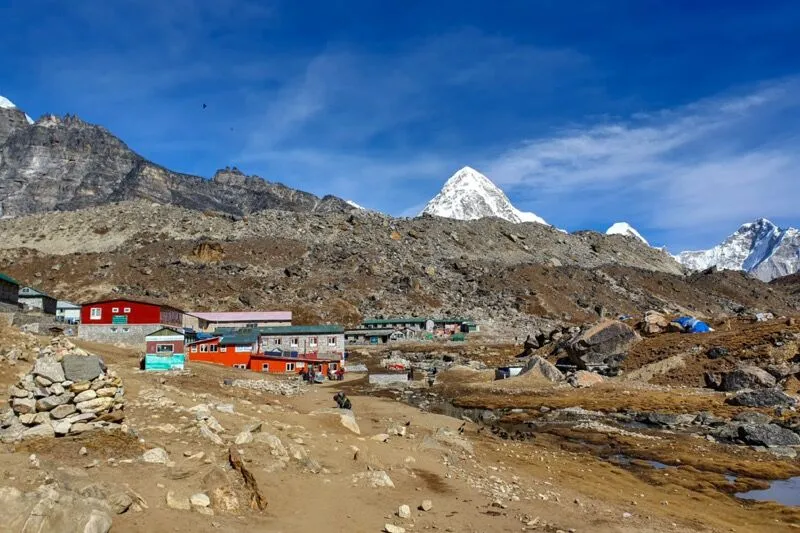
Beyond Tengboche, the trail climbs through Deboche’s birch groves and past the smaller settlements dotted along the valley before the landscape opens into the wide, boulder-scattered terrain below Ama Dablam’s south face. Vegetation here thins to low alpine scrub, the wind picks up noticeably, and the sense of being in genuinely remote mountain country settles in. Ama Dablam Base Camp sits on a gravelly moraine flat with the peak’s hanging glacier visible directly overhead, occasionally releasing a slow creak across the silence of the afternoon. Moving into tents here marks a distinct shift in the expedition’s character: camp routines begin, gear gets organized with real purpose, and the quiet of sleeping at altitude replaces the lodge warmth of the lower trail. The guide team checks all technical equipment this evening, so go through your personal kit carefully before the light goes.
The approach to Ombigaichan Base Camp takes you away from the Ama Dablam moraine and into a narrowing side valley that most Khumbu trekkers never visit. The terrain changes noticeably: loose scree fields, frozen stream beds crossed on stepping stones, and long stretches of boulder hopping that require concentration and good ankle support. As the valley closes in and the trail steepens, the upper ridgeline of Ombigaichan comes into full view for the first time, and the scale of what you’re about to attempt becomes concrete in a way that looking at photos never quite achieves. Base camp occupies a flat section of moraine with open views toward the southern Khumbu peaks, cold and exposed but striking in the afternoon light. The remainder of the day is spent reviewing the summit route with your guide, organizing technical gear, and eating and resting well before the early start tomorrow.
The summit push starts before dawn. Headlamps light the glacier above camp as the team moves in single file, crampons biting into firm névé with the particular sharp crunch that becomes oddly reassuring in the dark. The pace is deliberate throughout: steady breathing, precise foot placement, short rests timed carefully to prevent the cold from setting in on a stationary body. The upper section involves fixed ropes on steeper ground where the exposure is real and the valley floor has dropped far below, and the sky around you shifts from deep black to violet to pale copper gold as sunrise breaks across the Himalayan horizon. From the summit, the view reaches east to Makalu and Baruntse, north across the Khumbu Icefall toward the Lhotse-Nuptse wall, and south along ridges that recede into haze. The descent returns you to base camp tired, satisfied, and in possession of something that took real effort to earn.
Mountain weather in the Khumbu does not negotiate, and anyone who has spent time above five thousand meters knows that a clear forecast can turn within a few hours. This day exists precisely for that reality. If yesterday’s summit attempt was pushed back by wind, poor visibility, or deteriorating conditions on the upper ridge, today gives the team a second window to try. The morning begins with a careful read of the weather: sky color at first light, wind direction on the upper face, cloud behavior over the surrounding ridgelines. Your guide makes the call based on direct observation rather than any app, and that judgment is worth trusting. If conditions are favorable, the team moves onto the glacier and the summit day plays out exactly as planned. If the weather does not cooperate, the day is spent at base camp resting, rehydrating, and preparing for the descent to Tengboche the following morning. Either way, the day is purposeful. A reserve day is not wasted time; on a technical peak at this altitude, it is simply good expedition practice.
After days camped on the moraine, the descent toward Tengboche feels almost easy. The trail is familiar now, the altitude drops steadily with each hour, and your lungs notice the thickening air long before you consciously register it. The rocky upper valley gives way to tussock grass, then the first low juniper scrub, then the birch and rhododendron groves below the monastery ridge. Tengboche’s meadow appears ahead in the afternoon light, Ama Dablam still standing guard behind it, and the sight of lodge lights and a proper kitchen carries a specific kind of appeal after nights in a tent at high camp. The weight of the expedition has lifted and the memories are beginning to settle into something more permanent. A quiet evening here, with the summit behind you and the valley below, is one of the better ways to end a hard week in the mountains.
The trail from Tengboche descends sharply through Deboche’s birch and rhododendron forest, rejoining the main Dudh Koshi valley at Phunki Tenga before a long riverside traverse toward Jorsalle. Downhill walking moves quickly here but demands more attention than the slow uphill days of the approach: loose stone, exposed roots, and wet sections where the river mist drifts across the path require steady footing. Jorsalle is a compact settlement sitting just inside the lower boundary of Sagarmatha National Park, quieter than Namche and easy to underestimate, but genuinely comfortable for a rest night. The lower air is noticeably warmer and thicker after a week spent above four thousand meters, and most people sleep deeply here without needing any chemical assistance. It is a transitional day in the best sense: physically winding down while still moving through beautiful forest and river country with no particular hurry.
The morning trail climbs briefly back through Namche for a final pass through town, a natural stop for coffee, a last look at the gear shops, or simply sitting on a terrace above the valley one more time before the long descent begins. From Namche, the path drops steeply to the river and follows it south through Monjo and Phakding before the final steady climb up to Lukla in the late afternoon. The pace tends to be brisk on this last trekking day: energy is up, the altitude is down, and the anticipation of a flight home and a proper bed sharpens the step. Lukla in the evening is compact and slightly chaotic, full of returning expeditions, porters settling their loads outside lodges, and the smell of cooking from a dozen kitchens. It is a fitting, human end to a high mountain journey.
Lukla flights are weather-dependent, and the airport’s single tilted runway operates on mountain time rather than any schedule, so an early wake-up and readiness to board at short notice is simply part of the deal. The flight itself takes around thirty minutes and retraces, in compressed form, the approach you spent several days walking through on foot. Kathmandu arrives suddenly: the wide valley floor, the spreading city, the noise and warmth and low-altitude chaos of a place that feels more overwhelming now than it did at the start. Nepal Holiday Treks arranges the transfer back to your hotel, and a hot shower followed by a proper bed is the only priority for the first hour back in the city. The evening is yours to spend as you please: rest, a meal somewhere good in Thamel, or simply sitting quietly with the knowledge that the summit is done and the mountains are behind you.
Your final morning in Kathmandu is without pressure. Breakfast at the hotel, a last check of your bags, and then the transfer to Tribhuvan International Airport for your onward flight. If time allows before check-in, the lanes around Boudhanath or the quieter backstreets of Thamel are worth a short walk with no particular destination in mind. The expedition is complete. The summit is done. And Kathmandu sends you off as it always does: with noise, color, dust in the morning light, and the slow-settling feeling that those mountains, as far away as they now are, have stayed with you in some way that the flight home won’t quite shake loose.
Includes
Cost Includes
- Airport pickup & drop
- Lukla flight (round trip)
- Professional climbing guide
- Accommodation during trek
- Tented camp at Base Camp
- All meals during trek
- Climbing training
- Safety equipment
- First aid support
- Support staff
Cost Excludes
- International airfare
- Personal climbing gear
- Travel insurance
- Personal expenses
- Tips for guide & porter
- Extra accommodation
- Emergency rescue
FAQs
You should be comfortable using crampons, an ice axe, and moving on fixed ropes before attempting this climb. Prior experience on glacier terrain and basic rope management will prepare you well for summit day.
Spring (March to May) and autumn (September to November) are the two reliable climbing windows. Both seasons offer stable weather and generally clear conditions for the summit push.
It is physically demanding, involving a predawn start, glacier travel, and fixed-rope sections on steeper terrain. The climb is rated moderate-technical and is achievable for fit trekkers with proper mountaineering preparation.
Yes, a peak climbing permit from Nepal’s Department of Tourism is required. Your operator handles the permit paperwork as part of the expedition package.
Essential items include crampons, an ice axe, a climbing harness, a helmet, and layered high-altitude clothing suited to predawn temperatures. Nepal Holiday Treks provides a full gear checklist well before your departure date.

