
Trip Info
-
Tea House & Tented Camp
-
Included (Guide & Staff)
-
Trekking & Climbing Permits Included
-
6,169 meters
-
Kathmandu
-
Spring & Autumn
-
Kathmandu
-
Professional Climbing Guide
-
Airport Pickup & Drop Included
-
30 Days Before Start
Nirekha Peak Climbing – 18 Days
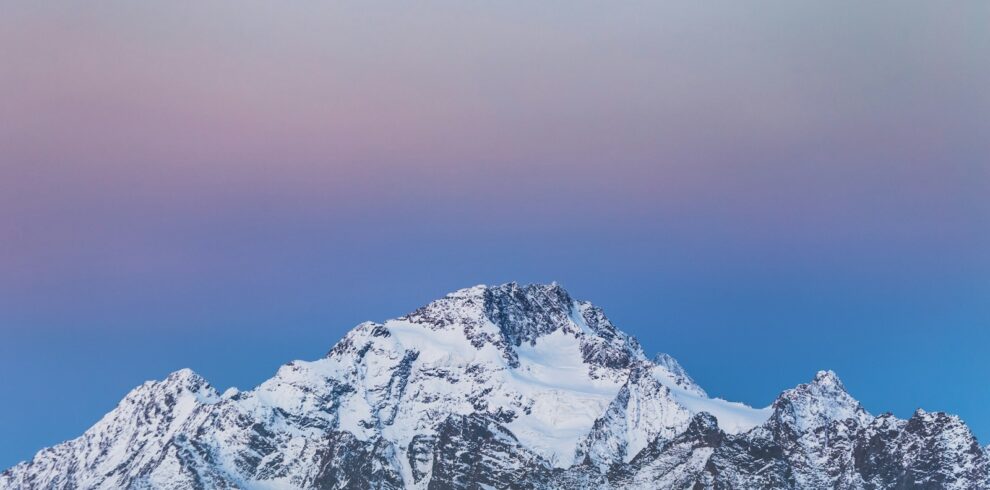
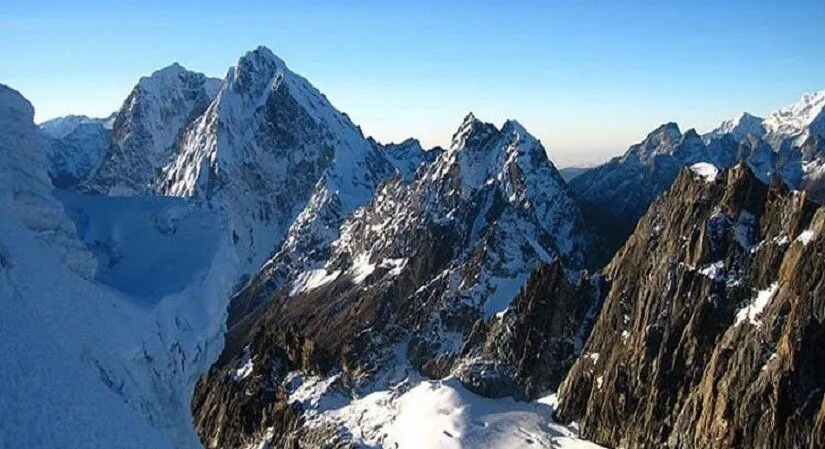
Nirekha Peak stands at 6,169 meters in the upper Khumbu region, tucked behind the more famous giants of Everest and Lhotse. It draws a specific kind of climber: someone who wants a genuine technical summit without the crowds that pack routes like Island Peak in the shoulder seasons. The approach winds through some of the most storied trekking terrain in the Himalayas, passing Buddhist monasteries, yak herds crossing ancient stone bridges, and ridgelines that open up without warning into views that stop you mid-step.
The route to Nirekha follows the classic Khumbu corridor before branching into the quieter Chhukung valley, where the landscape shifts from forest and mani walls to glacial moraine and raw alpine terrain. You’ll spend time acclimatizing properly, not because the itinerary demands it, but because the mountain does. Days at altitude are filled with exploratory hikes, teahouse conversations with Sherpa climbers, and the slow adjustment your body makes as the air thins around you.
Nepal Holiday Treks designed this 18-day expedition for climbers who are physically fit, comfortable on snow and ice, and ready to experience the Khumbu at a pace that respects the mountain. Crampons go on well before summit day, and the high camp spend is real mountain living. If you’ve been looking for a peak that offers technical reward without extreme expedition commitment, Nirekha is a strong answer.
Highlights
- Chhukung valley,Khumbu corridor
- Scenic Everest region trekking
- Acclimatization at Namche & Dingboche
- Climbing training included
- Experience Sherpa culture
- Explore Tengboche Monastery
- Glacier travel & rope climbing experience
Itinerary
You land at Tribhuvan International Airport and step into the organized chaos of Kathmandu. A representative will meet you and transfer you to your hotel in Thamel, the traveler hub of the city. Spend the afternoon walking the narrow lanes near Thamel, where thankas hang in shop doorways and the smell of incense carries across intersections. In the evening, gather for a briefing with your guide to go over gear, permits, and the days ahead. It’s worth checking your equipment list carefully tonight while resupply is still possible. The city hum outside is a good reminder that in 48 hours you’ll be somewhere very different.
The flight to Lukla is a ritual of its own. The small twin-prop banks sharply over green hills before dropping onto a runway that ends at a stone wall, and the passengers who’ve done it before still grip their armrests. Once you’re in Lukla and the engine noise fades, the Khumbu begins. The trail from Lukla descends steadily into the Dudh Koshi river valley, crossing suspension bridges strung with prayer flags that flutter and snap in the mountain breeze. Phakding sits along the riverbank, and the teahouses there are warm, busy, and welcoming after the first few hours on your legs. The sound of the river running below the village follows you into sleep.
This is the day most people remember for the wrong reasons and the right ones. The trail crosses the Dudh Koshi multiple times on high suspension bridges, each one swaying gently under foot traffic, with views straight down into grey-green glacial water. The climb to Namche is long and relentless, gaining serious elevation through dense rhododendron and pine forest. Just below the final push into town, the forest breaks open and Everest appears for the first time above the Lhotse-Nuptse wall, a triangular shape so recognizable it almost feels unreal. Namche itself is a horseshoe-shaped town built into the hillside, full of bakeries, gear shops, and Sherpa families going about their day. You’ve earned tonight’s meal.
Staying put in Namche gives your red blood cell count time to catch up with your ambition. The morning hike climbs to the Everest View Hotel ridge, where the panorama spreads across Everest, Lhotse, Ama Dablam, Thamserku, and Kongde in one unbroken sweep. You’ll also walk through Khumjung village, a traditional Sherpa community with a school Sir Edmund Hillary helped build and a gompa that claims to hold a yeti scalp. The afternoon back in Namche is good for wandering the market, talking with local outfitters, or watching the town’s social life unfold at the tea stalls. Your body is working hard even when you’re standing still, and the extra day here pays dividends later.
Leaving Namche, the trail contours along the valley wall with Ama Dablam filling the eastern skyline at every turn. The path passes through Phunki Tenga, a riverside cluster of teahouses where the roar of the Dudh Koshi is loud enough to shout over, then climbs steeply up through juniper and rhododendron to Tengboche. The famous Tengboche Monastery sits on a saddle at the top of the ridge, its red-and-gold facade framed by some of the most dramatic mountain scenery anywhere on earth. If the timing works, the late afternoon puja inside the monastery is worth attending. Monks in maroon robes chant low, horns sound across the valley, and the smell of yak butter lamps fills the air. It’s one of those moments that stays with you.
The trail drops from Tengboche into the Imja Khola valley, passing through Pangboche, the highest permanently inhabited village in the Khumbu. Stone walls divide fields of barley and potato, and the houses here look like they’ve been built by the same hands for generations. Above Pangboche the landscape opens and the vegetation thins noticeably. Ama Dablam’s southwest ridge towers overhead in a way that makes even experienced trekkers stop walking. Dingboche sits on a flat glacial plain surrounded by stone-walled windbreaks, and the teahouses are basic but well-run. The sky here at night, away from any real light pollution, is extraordinary.
Nangkartshang Hill rises directly above Dingboche and serves as the standard acclimatization target for expeditions heading further into the Khumbu. The climb is steep from the start, switchbacking up a dry ridge with the Imja Khola valley dropping away below. At the top, the view takes in Makalu to the east, Cho Oyu to the northwest, and the entire upper Chhukung basin where you’re headed. You also get your first real look at the Nirekha massif from a distance, which is a useful mental reference point for the days ahead. Coming back down, the knees and lungs are talking to each other in new ways. That’s the point. The afternoon rest in Dingboche is genuine recovery.
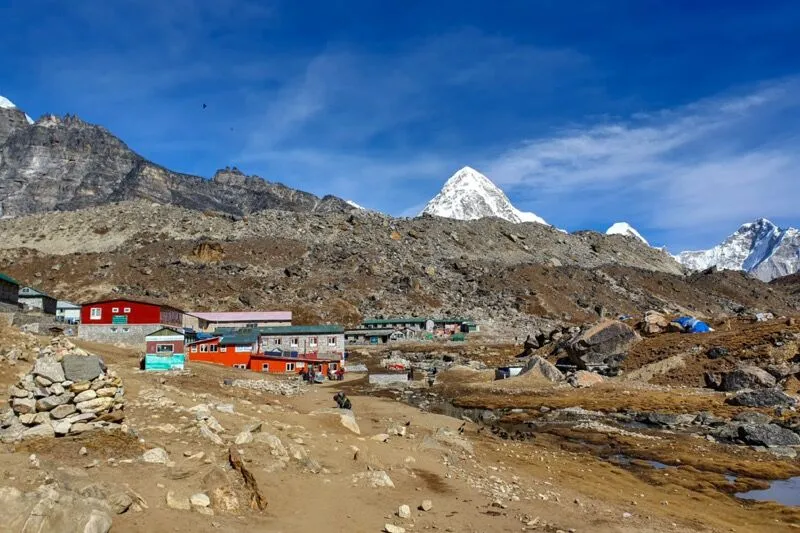
The trail from Dingboche into the Chhukung valley is short by Khumbu standards, but it’s dense with visual reward. The path crosses the Imja Khola on a footbridge and follows the moraine above the river, with Island Peak’s wedge-shaped summit visible ahead and Lhotse’s south face dominating the left skyline. Chhukung is a tiny cluster of teahouses and lodges at the head of the valley, used mainly as a staging point for Island Peak and Imja Tse expeditions. It has a remote, end-of-the-road feel that suits the mood of the upcoming days. In the afternoon, a short walk up the ridge above the village opens up views of the Chhukung Ri ridgeline and the glaciated terrain you’ll be crossing to reach Nirekha Base Camp. The cold arrives early here and lingers through morning.
This stretch leaves the teahouse trail behind. The route climbs across glacial moraine, loose rock, and patchy snow to reach the base camp area below Nirekha. Navigation requires attention and your guide will be setting the pace for acclimatization. The terrain is raw and visually striking in the specific way that only high-altitude glacial landscapes are: all grey rock, blue ice, and sky. Base camp is established on a flat rocky section with the peak’s lower face visible above. Camp setup, gear checks, and a quiet evening around the team are the program for today. Your body is telling you things at this altitude that are worth listening to. The wind often picks up after dark.
Summit-day performance depends heavily on what happens today. The morning is spent on fixed-rope technique, crampon practice on the snow slopes near camp, and anchor systems if any team members need a refresher. Your climbing Sherpa and lead guide run these sessions with a practical focus, not a classroom one. Glacier travel, ice axe arrest position, and roping up as a team are all covered in real terrain, not theory. The afternoon is for gear organization, layering systems, boot fitting checks, and calorie loading. The route above High Camp will be assessed by your guides based on current conditions. At this altitude, sleep quality drops, appetite flattens, and headaches are common. These are normal responses. Rest when you can.
The move to High Camp is the last step before the summit push. The route gains significant elevation over mixed terrain: moraine, packed snow, and sections of steeper ice where crampons grip and the breathing gets deliberate. High Camp is a small, exposed ledge where tents are pitched close together and anchored against wind. The views from here are severe and real: the Khumbu glacier spreading out far below, Lhotse rising in a near-vertical wall to the north, and the summit of Nirekha within visible reach above. Dinner and hydration are non-negotiable here even when appetite fails. Nepal Holiday Treks’ mountain crew manages logistics at camp so you can focus on conserving energy. An early sleep is the goal. Tomorrow will start before light.
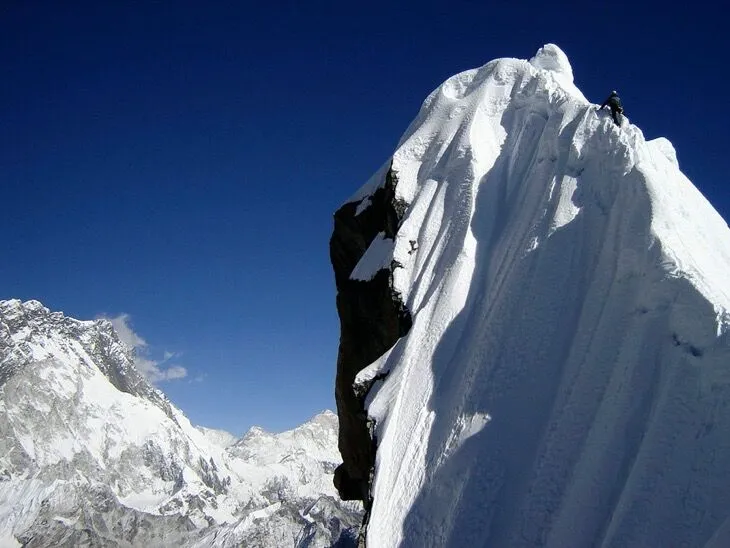
The alarm sounds in darkness and the cold is immediate. Headlamps click on, boots go into crampons while hands still feel clumsy, and the rope team moves out. The initial climb is steep, crossing a section of ice and mixed rock before the slope opens into the summit snowfield. The ridge narrows as you gain height, and the exposure on either side becomes real. Fixed ropes on the technical sections allow steady upward progress. The summit gives a 360-degree view across the entire Khumbu: Everest, Lhotse, Makalu, Baruntse, Ama Dablam, and the chain of lesser peaks running in every direction. It’s the kind of place that resets your internal scale. The descent to Base Camp is careful and methodical, but by the time you reach camp the relief and satisfaction are something else entirely.
Coming down from altitude has its own rhythm. The body starts recovering quickly below 5,000 meters and the change is noticeable within hours: appetite returns, headaches fade, sleep feels possible again. The descent from Base Camp retraces the moraine trail back to the Chhukung valley. The teahouses in Chhukung look different after the summit days, smaller and warmer and extremely welcome. This is a good afternoon for hot soup, flat surfaces, and not thinking about anything above 5,000 meters. The mountains haven’t changed, but your relationship with them has. A summit or not, you’ve spent real time in serious terrain and the Khumbu doesn’t give that experience away cheaply.
A long descent day that covers significant ground through familiar terrain. The trail runs back through Dingboche, drops into the Imja Khola valley, and climbs briefly through Pangboche and Tengboche before the long descent to Namche. The Khumbu forest re-enters the picture gradually, and the air thickens in a way that feels almost luxurious after a week above 4,500 meters. Namche’s bakeries, hot showers, and something approaching a restaurant menu are the evening’s main attractions. The gear is filthy, the legs are tired, and the conversation in the teahouses is easy and wide-ranging. Climbers share route conditions, compare campsites, and sometimes trade the particular kind of quiet that only comes after high-altitude work.
The final walking day follows the descent through familiar ground: the forests above Phakding, the suspension bridges over the Dudh Koshi, and the gradual leveling of the trail as Lukla approaches. It’s worth pausing at the bridge overlooks on the way down, not because you haven’t seen them, but because you see them differently now. Lukla arrives in the late afternoon with its single main street, airport wall at the far end, and lodges full of expedition teams rotating through. The evening is for a quiet celebration, a round of tea or raksi depending on preference, and the very satisfying task of repacking a bag you don’t have to carry uphill anymore.
Morning flights out of Lukla are at the mercy of Himalayan weather, but the early slots are the most reliable. The short flight back over the green foothills of eastern Nepal feels completely different from the outbound journey two weeks ago. Kathmandu’s streets and traffic come as a genuine sensory reset. The afternoon is yours: a proper shower, laundry handed off to a guesthouse service, a meal at a restaurant with a menu longer than six items. The city absorbs returning expeditions without ceremony, which is part of its charm. Your gear is richer for the mud and wear. A debrief with your guide over dinner closes the mountain chapter and opens the city one.
Kathmandu holds more than its airport and trekking outfitters. Pashupatinath Temple, on the banks of the Bagmati River, is one of the most important Hindu shrines in Asia. Sadhus in saffron robes sit along the ghats, pilgrims move in steady streams, and cremations take place on the riverside platforms with open-air ceremony and no performance for outsiders. Boudhanath Stupa is a ten-minute drive away and operates on a completely different frequency: a massive white dome ringed with prayer flags, butter lamp shops, and Tibetan refugees who have built an entire neighborhood around it over decades. The afternoon gives time for a final wander through Thamel’s market lanes, souvenir decisions, and a proper sit-down dinner before tomorrow’s departure.
The expedition ends with a transfer to Tribhuvan International Airport. Depending on your flight time, the morning may allow for a last breakfast at the hotel or a quiet walk through the neighborhood. The bag is heavier with what you’ve brought back: a summit certificate if the weather and mountain cooperated, a set of genuinely used gear, and a clear memory of what it feels like to stand on a snow ridge above six thousand meters with the entire Khumbu laid out below you. That doesn’t compress into luggage. It travels differently.
Includes
Cost Includes
- Airport pickup & drop
- Lukla flight (round trip)
- Professional climbing guide
- Accommodation during trek
- Tented camp at Base Camp
- All meals during trek
- Climbing training
- Safety equipment
- First aid support
- Support staff
Cost Excludes
- International airfare
- Personal climbing gear
- Travel insurance
- Personal expenses
- Tips for guide & porter
- Extra accommodation
- Emergency rescue
FAQs
You should be comfortable walking long mountain days with a loaded pack and have basic familiarity with crampons and ice axes before arriving. Full technical training is provided at Base Camp, but coming in with some prior experience on snow or ice makes the learning curve much easier.
Spring (March to May) and autumn (September to November) offer the most stable weather windows. Spring gives slightly warmer temperatures and longer stable periods, while autumn skies tend to be clearer and the post-monsoon trails are well-used and in good shape.
Altitude-related symptoms are common above 4,000 meters and should be taken seriously. The itinerary includes acclimatization days specifically to reduce that risk, and your guide will monitor the team throughout. Descent is always the correct response to worsening symptoms.
Nirekha Peak requires a Nepal Mountaineering Association (NMA) climbing permit in addition to the standard Sagarmatha National Park entry permit and Khumbu Pasang Lhamu Rural Municipality fee. Nepal Holiday Treks handles all permit arrangements as part of the expedition package.
The package covers airport transfers, domestic flights, all accommodation from teahouse to base camp tents, all meals on trek, climbing Sherpa support, fixed ropes and technical equipment at altitude, permits, and a comprehensive gear and safety briefing in Kathmandu. Personal travel insurance with high-altitude evacuation coverage is required but arranged separately.