
Trip Info
-
Tea House & Tented Camp
-
Included (Guide & Staff)
-
Trekking & Climbing Permits Included
-
5,863-meter
-
Kathmandu
-
Spring & Autumn
-
Kathmandu
-
Professional Climbing Guide
-
Airport Pickup & Drop Included
-
30 Days Before Start
Mt. Langsisa Ri Peak Climbing
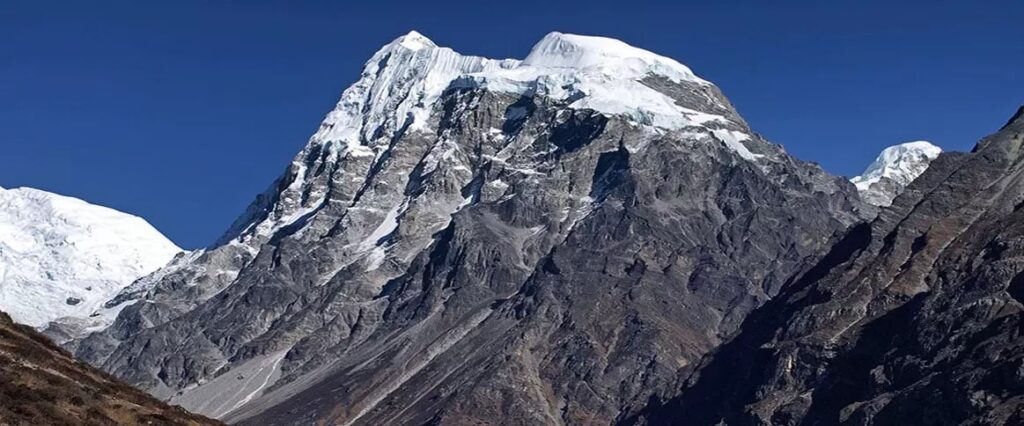
Most climbers who come to Nepal head straight for Everest or Annapurna. Langsisa Ri sits quietly in the Langtang Valley, and that is precisely what makes it worth your attention. This 5,863-meter peak offers a genuine high-altitude climbing experience without the queues, the crowds, or the inflated price tags that come with Nepal’s more famous objectives. The approach alone is one of the most rewarding valley walks in the country.
The route passes through dense rhododendron and pine forests, opens up into wide glacial meadows, and delivers you to Kyanjin Gompa, a small monastery settlement ringed by snowy ridgelines. From there, the climb pushes into raw glacier terrain where crevasses, steep snowfields, and shifting ice test your fitness and your nerve in equal measure. It is not a walk-up, but it is achievable for trekkers with solid fitness and basic crampon experience.
Nepal Holiday Treks has run this route many times and understands the fine balance between pushing for the summit and making smart decisions when conditions shift. You return to Kathmandu having crossed glacial ice, stood above 5,800 meters, and walked through one of the least-visited valleys in the Langtang region. That combination is genuinely hard to find anywhere in Nepal.
Trip Highlights
- Kyanjin Gompa
- Highest trekking peak in Nepal
- Remote and less crowded trekking route
- Gradual acclimatization for safety
- Climbing training included
- Glacier walking experience
- Cultural experience in traditional Himalayan villages
Itinerary
Your journey begins the moment you land at Tribhuvan International Airport and step into the organized chaos of Kathmandu. Your guide meets you at the arrival hall and transfers you to your hotel in Thamel, the city’s main traveler district, where narrow lanes are packed with gear shops, local restaurants, and the persistent hum of motorcycle engines. In the afternoon, the team conducts a full pre-trip briefing covering the route, equipment checklist, team introductions, and any last-minute gear needs you might want to sort at one of the nearby outdoor stores. Spend the evening walking through Thamel’s backstreets, eating a proper Nepali meal, and resting before the journey north begins tomorrow.
You leave the capital early, crossing the Ring Road before the morning traffic thickens, and begin a long drive northwest through Trishuli Bazar and Dhunche before descending into the Bhote Koshi river valley. The road is paved in sections and rough in others, winding through terraced hillsides where local farmers grow mustard, millet, and potatoes on plots carved into near-vertical slopes. By late afternoon the valley narrows, the river grows louder, and Syabrubesi appears as a compact cluster of teahouses and guesthouses wedged between ridges. It is a working border town with a relaxed pace and excellent views upstream toward the Langtang peaks already visible above the treeline. Settle in, check your boots, and eat well because the real walking starts tomorrow.
The trail leaves Syabrubesi and immediately crosses the Langtang Khola on a suspension bridge, the river churning white below your boots, before climbing steadily into a mixed forest of oak, maple, and rhododendron. You pass through a few small tea-stop settlements where children watch from doorways and old men sit on stone walls warming themselves in the morning sun. The path is well-used and clearly marked, rising through alternating patches of dense canopy and open ridgeline where the first clear views of distant snow ridges begin to appear to the north. Lama Hotel is not a hotel in any conventional sense but a loose collection of timber teahouses built along the river, each one offering basic but clean rooms and reliably good dal bhat. It is a comfortable first-night stop that gives you a strong sense that the valley you have entered is genuinely wild and unhurried.
Today the valley opens dramatically. The forest thins and you emerge onto wide grassy slopes where yaks graze on the upper pastures and prayer flags snap in the cold wind off the glaciers. The trail runs along the true right bank of the Langtang Khola, crossing several side streams on rough stone bridges, before curving north toward the broad flat basin where Langtang Village sits. This settlement was almost entirely destroyed by the 2015 earthquake and has since been rebuilt, though the memory of the disaster remains present in the memorials and in conversations with local families who lost relatives that day. The rebuilt village is small, resilient, and genuinely worth a slow walk through before dinner. At this altitude you may notice the air thinning slightly, particularly on steeper sections of trail, so keep your pace measured and drink consistently throughout the day.
The walk to Kyanjin Gompa is short in distance but rewarding in scenery, passing through yak pastures where stone-walled corrals mark the summer grazing territories of herder families who have lived here for generations. The Langtang Glacier comes into full view as you approach the settlement, its crumpled grey-white surface pouring down from the high ridges in a slow frozen river. Kyanjin Gompa itself is a remarkable place to arrive at: a monastery, a cheese factory (producing genuine aged yak cheese worth buying), a cluster of teahouses, and a backdrop of 6,000-meter peaks that makes it feel like the edge of the world. Spend the afternoon walking up to the gompa, watching the prayer wheels turn, and getting your first good look at the Langsisa Ri massif to the east. The air is noticeably thinner here and the temperature drops fast after sunset, so layer up early.
Skipping acclimatization at this elevation is one of the most common mistakes climbers make, and it usually costs them the summit later. Today you hike up Kyanjin Ri, a prominent viewpoint directly above the gompa that rewards the steep effort with one of the best 360-degree panoramas in the Langtang region. From the top you can identify the full Langtang Lirung massif, Gangchenpo, Naya Kanga, and on a clear morning the white triangle of Langsisa Ri itself sitting further east beyond the glacier. The ascent is on open grassy slopes with no technical sections, which lets you focus on breathing steadily and reading how your body is adapting. You return to Kyanjin Gompa for a proper lunch, a rest, and an early dinner. The evening is a good time to review gear with your guide, discuss the route ahead, and confirm that your crampons, harness, and ice axe are all fitted correctly.
Leaving Kyanjin behind, the trail heads east along the lateral moraine of the Langtang Glacier, a path that most trekkers never walk because most trekkers turn back at the gompa. The landscape here is entirely different from the lower valley: treeless, expansive, and cut through by glacial meltwater streams that run fast and cold even in October. Langsisa Kharka is a seasonal herder settlement consisting of a few stone shelters and open meadows used as pasture until the first heavy snowfall pushes the yak herders back down to lower ground. Arriving here in late afternoon with Langsisa Ri filling the eastern skyline is the kind of moment that stays with you. Camp is set up on flat ground near the stream, the cook team gets a fire going, and the silence after dinner is total. This is remote Nepal in the most honest sense.
The approach to base camp crosses moraines covered in loose rock and occasional patches of old snow, with the glacier increasingly visible to your left as you climb. Route-finding requires attention here as there is no worn trail, and the support team uses fixed reference points and prior experience to navigate efficiently. Base camp is established on a relatively flat section of moraine with clear views of the southwest face of Langsisa Ri, the route you will climb in the days ahead. The afternoon is spent setting up tents, organizing technical equipment, testing communication gear, and conducting a thorough safety briefing with your climbing guide. Nepal Holiday Treks keeps group sizes intentionally small on the technical sections to ensure each climber gets proper individual attention and instruction. Rest, hydrate, and sleep as early as the altitude allows. Tomorrow begins the real climb.
The push to high camp follows a line up the lower glacier, crossing a bergschrund and moving onto steeper snow slopes where crampons are essential from the first step. Your guide sets the pace deliberately slow, coaching breathing rhythm and crampon technique as the angle increases. High camp is a small flat platform cut or found on a rocky outcrop or snow shelf, depending on seasonal conditions, and the tents here are pitched tight against the wind. The views from this height are extraordinary: the entire Langtang Valley rolls out to the west below you, and on a clear afternoon the Tibetan plateau is visible as a dark brown horizon beyond the northern ridgelines. The evening routine is disciplined: eat a warm meal, hydrate aggressively, check equipment once more, and sleep by 7pm if possible. A 3am or 4am wake-up for summit day means that rest is not optional.
Before dawn, headlamps cut through frozen darkness as the team moves in single file up the final snowfield. The upper section of Langsisa Ri involves a sustained steep snow climb with one short but genuine ice step near the summit ridge that requires confident crampon technique and a secure ice axe grip. There is no technical rock scrambling, but the exposure is real and the consequences of a slip at this altitude are serious. The summit itself is a narrow snow crest with an almost violent contrast of views: glaciated terrain to the north, the green fold of the Langtang Valley far below to the south, and on exceptional days a glimpse of Everest and Manaslu on the distant horizon. Most climbers stand on the summit for ten to fifteen minutes before wind or cold prompts the descent. You return to base camp in the early afternoon, and the combination of exhaustion and relief makes that afternoon tea the best you have ever tasted.
Descending from base camp after a summit feels different from the climb up. Your legs are tired but the pressure is gone, and the landscape you pushed through two days ago now looks entirely different from the other direction. The moraine descent to Langsisa Kharka passes quickly, and from there the trail back to Kyanjin Gompa is familiar ground. Arriving at the gompa feels like arriving somewhere genuinely warm and civilized: a proper meal, a cup of butter tea at one of the teahouses, and the satisfaction of knowing the hardest part is done. The lower altitude means breathing comes easier with every hour, which is its own reward. Take a slow evening walk around the monastery, watch the light leave the high ridges, and let the body begin its recovery.
The long descent back down the Langtang Valley reverses the route you walked a week ago, but the descent gives you a completely different perspective. Slopes that felt steep on the way up now roll out easily underfoot, and the forest that reappears as you drop below 3,000 meters feels almost tropical after days of bare rock and ice. Lama Hotel is a welcome sight with its familiar teahouses and riverside setting. Your appetite, which altitude may have dulled over the past week, will almost certainly return in full force by lunchtime. In the evening, the support team shares a meal together with the climbing group, and there is usually a relaxed atmosphere that comes with the journey being effectively complete.
The final day of trekking follows the river downstream through the lowest sections of the Langtang Valley, where the forest is dense, the birdsong returns, and the contrast with where you were three days ago is almost absurd. Syabrubesi appears after a final descent through a small gorge section, its rooftops and the sound of motorbikes a genuinely surprising return to something resembling a town. The evening is relaxed: a decent meal, cold beer if that is your preference, and the warm looseness that comes from a body that has worked hard and earned its rest.
The road back to Kathmandu reverses the route from Day 2, following the Bhote Koshi river south before climbing onto the main Prithvi Highway and pushing through the valley towns toward the capital. The drive can be long depending on road and traffic conditions, and a midday stop in Trishuli or Kakani for lunch breaks the journey reasonably. By late afternoon you are back in Thamel, and the city that felt busy on arrival now feels positively overwhelming after two weeks in the mountains. Nepal Holiday Treks arranges a final team dinner in the evening, giving everyone a chance to share the experience properly before going separate ways.
Your last morning in Nepal is yours to use however you want. Some climbers spend it at Boudhanath Stupa, walking the circumambulation circuit one last time with the prayer wheels and incense smoke. Others head to Pashupatinath for an hour of quiet beside the Bagmati River. If your flight departs in the evening, there is time for a final dal bhat lunch, last-minute souvenir shopping in Thamel, and a proper goodbye to the team that got you up the mountain. Your guide arranges airport transfer with enough buffer time to handle Kathmandu’s unpredictable traffic. You leave with a summit at 5,863 meters in your record and the Langtang Valley in your memory.
Includes/Excludes
Cost Includes
- Airport pickup & drop
- Professional climbing guide
- climbing permit
- Trekking permits
- Accommodation during the trek
- Tented camp at Base Camp
- All meals during the trek
- Climbing training
- Safety equipment
- First aid support
- Support staff
Cost Excludes
- International airfare
- Personal climbing gear
- Travel insurance
- Personal expenses
- Tips for guide & porter
- Extra accommodation
- Emergency rescue
FAQs
Langsisa Ri is considered a moderate trekking peak, but it involves steep snow slopes, glacier travel, and genuine exposure above 5,500 meters. Prior trekking experience above 4,000 meters and solid physical fitness are strongly recommended before attempting this climb.
You need to be comfortable using crampons, an ice axe, and a harness on steep snow. Basic rope techniques are helpful, and your guide will conduct hands-on training at base camp before the summit push.
The most reliable windows are October to November and late March to May. These months offer the most stable weather, clearer skies for summit attempts, and manageable temperatures at high camp.
You need a Langtang National Park entry permit and a climbing permit issued by the Nepal Mountaineering Association. Nepal Holiday Treks handles all permit paperwork as part of the expedition package.
The trek to Kyanjin Gompa is well within reach for anyone who hikes regularly. The climb from base camp to the summit is physically demanding with a long summit day, so arriving in strong cardiovascular condition makes a meaningful difference to your experience.