
Trip Info
-
Tea House & Tented Camp
-
Included (Guide & Staff)
-
Trekking & Climbing Permits Included
-
6,186 meters
-
Kathmandu
-
Spring & Autumn
-
Kathmandu
-
Professional Climbing Guide
-
Airport Pickup & Drop Included
-
30 Days Before Start
Kyajo Ri Peak Climbing – 16 Days
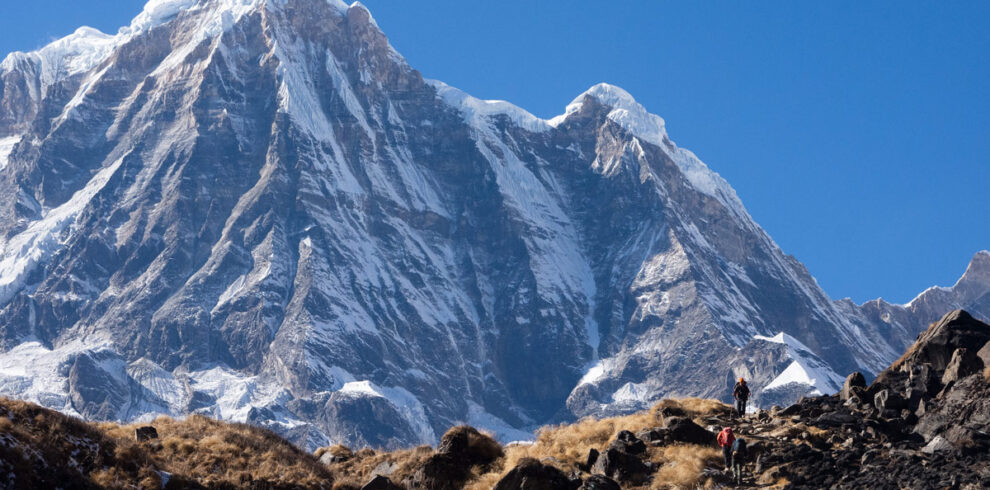
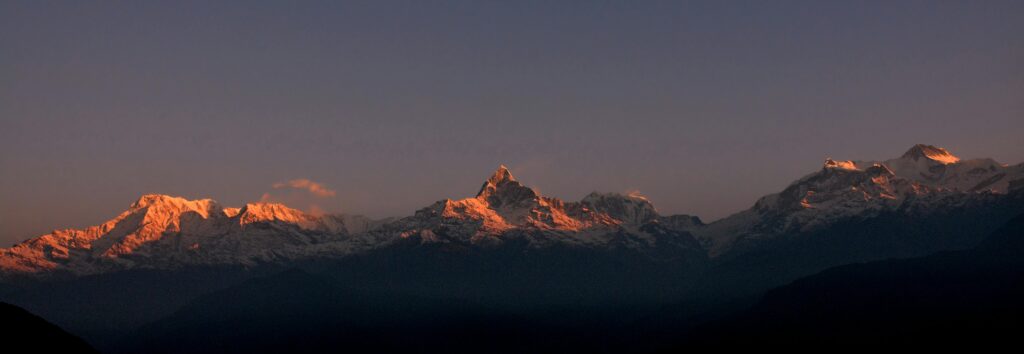
Kyajo Ri is one of those peaks that earns its reputation quietly. Standing at 6,186 meters in the Khumbu region, it sits just far enough off the Everest trail to feel genuinely remote, yet close enough that you approach through familiar Sherpa villages and rhododendron forests before the terrain turns serious. The summit views, when you reach them, take in Everest, Lhotse, Cho Oyu, and the full sweep of the Rolwaling Himal in a single panorama that very few climbers ever get to witness.
This climb is designed for trekkers who have solid high-altitude experience and want their first real technical summit. The route involves glacier travel, fixed rope sections, and a demanding summit push that tests both fitness and mental resolve. Nepal Holiday Treks has structured the itinerary with a careful acclimatization schedule so your body has time to adjust before the harder days begin.
What makes Kyajo Ri worth the effort is how self-contained the whole experience feels. You move through the Khumbu’s lower valleys at a reasonable pace, watching the landscape change from pine forest to rocky moraines, and by the time you reach base camp, the mountain has already made its impression. The summit itself is a genuine achievement, one that takes preparation, patience, and a good team.
Trip Highlights
- Khumbu Valley,Gokyo
- Highest trekking peak in Nepal
- Everest or Annapurna, Ramdung
- Remote and less crowded trekking route
- Gradual acclimatization for safety
- Climbing training included
- Glacier walking experience
- Cultural experience in traditional Himalayan villages
Itinerary
Your journey begins the moment you land at Tribhuvan International Airport and step into the organised bustle of Kathmandu. A representative will meet you at arrivals, manage your transfer, and get you checked into Hotel Shambala or a property of the same category without any of the usual arrival friction. Kathmandu rewards slow observation: the streets around Thamel are layered with old shop fronts, temples wedged between guesthouses, and the constant sound of bells and motorbikes blending into something oddly musical. In the evening, take a short walk through Thamel if you have the energy, or simply sit on the hotel terrace and let the city settle around you. Your team will brief you on the expedition structure over a welcome session, covering the general plan and answering any early questions you have.
This is a practical, productive day that sets the foundation for everything that follows. You will visit the gear shops around Thamel to rent or purchase any missing equipment, from crampons and ice axes to base layer clothing, and the team will confirm that everything fits correctly and meets the technical demands of the route. Climbing permits for Kyajo Ri are processed through official channels, and your expedition staff handles all the paperwork while you focus on sorting your personal kit. It is also worth spending part of the afternoon studying the route map and understanding the camp positions, so you arrive at base camp with a clear mental picture of what lies above. Kathmandu has good cafes if you need a quiet hour to read or rest between errands. By the end of the day, every logistical detail should be confirmed and your pack should be ready to go.
The early morning flight from Kathmandu to Lukla is one of the most dramatic short flights in the world. You approach a narrow runway carved into a hillside with a mountain wall at one end and a sharp valley drop at the other, and the landing is as abrupt and exhilarating as it sounds. Once you step off the plane in Lukla, the trekking begins immediately, and the trail drops gently through pine and rhododendron forest following the Dudh Koshi river downstream. The path passes through small Sherpa settlements where prayer flags are strung between houses and mani walls line the trail edges, each stone carved with Buddhist scripture. You will cross several suspension bridges over the river, the metal cables humming in the wind with the water rushing white far below. Phakding is a relaxed village with a warm lodge atmosphere, and your overnight at Tribeni Lodge makes for a comfortable and well-organised first night on the trail.
Today’s trail is one of the Khumbu’s classic stages, and it earns that status through variety rather than ease. The route climbs steadily through forest, crosses the famous Hillary Suspension Bridge high above the Dudh Koshi, and moves through Monjo before entering Sagarmatha National Park at the checkpoint just before the final ascent. That last climb to Namche is steep and persistent, roughly an hour of zigzagging up a wooded hillside where you often catch your first clear view of Everest framed between the ridgelines. Namche Bazaar itself is built into a natural bowl in the hillside, a horseshoe of stone buildings filled with bakeries, gear shops, and tea houses. The town hums with trekkers, yak herders, and locals going about their day, and it has enough character to hold your attention even after many visits. Arriving in the late afternoon gives you time to explore the market streets before dinner at the lodge.
Acclimatization days are not rest days, they are some of the most important days of the expedition. The hike above Namche climbs to the Everest viewpoint ridge, where on a clear morning you can see Everest, Lhotse, Ama Dablam, Thamserku, and Kantega all at once, a lineup that makes the effort of getting there feel immediately worthwhile. From that ridge you look back down into the Namche bowl and forward into the deeper Khumbu, and the scale of the landscape registers in a way it simply does not when you are just walking through it. Returning to Namche for lunch, you might visit the Sherpa Culture Museum or browse the weekly market if it falls on a Saturday. The afternoon is yours to rest, eat well, hydrate carefully, and sleep at the same altitude you ascended from. Your body is doing critical work today even while you are sitting still.
Leaving Namche, the trail contours around the hillside before branching away from the main Everest route toward quieter ground. The path toward Mende feels more intimate, passing through forest sections where sunlight filters through birch and juniper and the valley below drops into shadow. You will cross smaller streams and begin noticing the vegetation thinning steadily as you gain altitude through the afternoon. This section sees far fewer trekkers than the Everest base camp trail, and that solitude becomes noticeable in a way that feels genuinely refreshing after the busy lower valleys. Mende is a modest village, but the views opening above it toward the higher peaks give you a clear sense of where you are heading. Settle in early, eat a full dinner at the lodge, and allow yourself a proper night of sleep.
This is the day the expedition properly begins. The trail from Mende pushes into high terrain, moving through rocky pastures where yaks graze in summer and the air starts to carry that familiar high-altitude dryness. You will cross lateral moraines, navigate loose scree sections, and follow a route that becomes more rugged with each passing hour. Base camp sits on a rocky flat below the Kyajo Ri glacier, surrounded by a ring of ice and stone, with the mountain rising sharply above in a series of ridgelines and snowfields. The afternoon light on the upper faces is striking, all shadow and silver, and you will have time to study the route from camp before the temperature drops at sunset. The tented camp is well set up, and the cooking team will have a warm meal waiting when you arrive.
A full rest day at base camp is an investment in summit success, not a gap in the schedule. You spend time exploring the immediate surroundings of camp, watching the glacier shift almost imperceptibly, listening to the occasional crack of settling ice, and getting comfortable with the gear you will use on the technical sections above. Your climbing guide will walk through the route plan in detail, discuss the fixed rope system, and run through crampon and ice axe technique for anyone who needs a refresher. The mountain above base camp looks entirely different when you are standing directly beneath it compared to any photograph you may have studied beforehand. Many climbers find this day mentally clarifying. Eat as much as you can manage, rest as much as possible, and sleep early.
The move to Camp I marks the first real day of technical climbing on Kyajo Ri. The route begins on steep, broken ground above base camp before reaching the glacier, where you rope up and put crampons on for the first time. Progress across the glacier is careful and methodical, with your guide reading the snow surface for crevasse risk and identifying the safest line toward the upper slopes. As you gain height, the views back down toward the Khumbu valley open dramatically, and on a clear day the chain of peaks stretching toward Cho Oyu becomes fully visible. Camp I sits on a sheltered snow platform with just enough flat ground for the team tents, positioned to allow an efficient start toward the higher camps. The evening is cold and quiet at this elevation, and the stars at night are extraordinary.
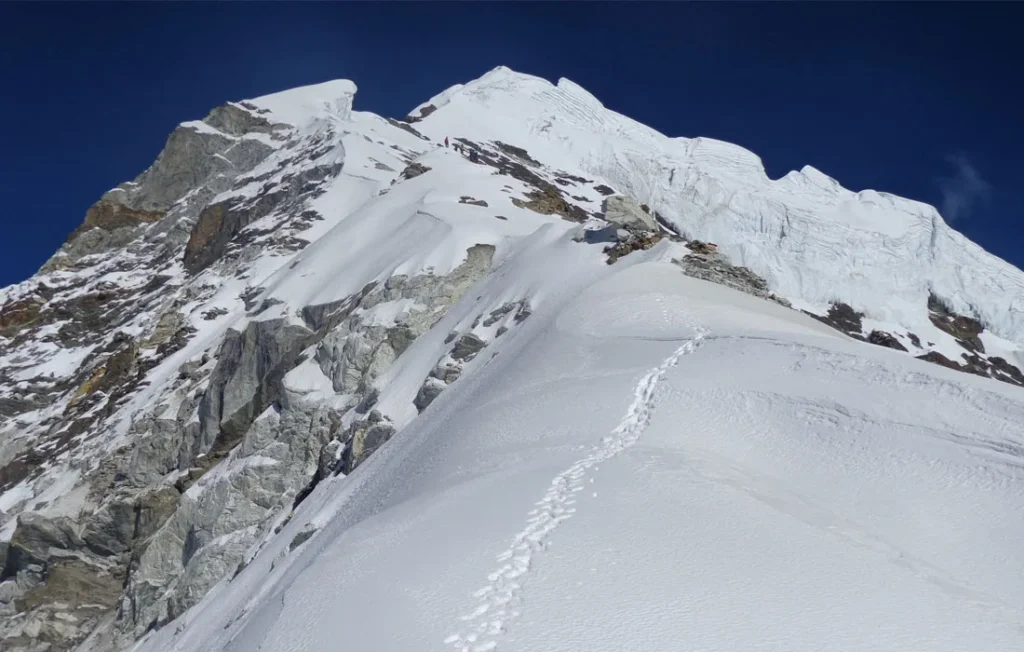
From Camp I, the terrain becomes more demanding. The route pushes higher through steeper snow and ice slopes where fixed ropes become your primary safety system and your climbing technique needs to be deliberate and controlled at every step. You will move through sections where the angle increases noticeably, using your ice axe with purpose and trusting the front points of your crampons on ground that would be impassable without them. The physical demand is significant at this altitude, but the technical elements are well within reach for climbers who have prepared properly. Camp II is positioned high on the ridge, and from there the summit triangle of Kyajo Ri becomes fully visible above you for the first time. You eat, hydrate aggressively, and try to rest as much as the altitude and anticipation will allow.
Summit day begins well before first light. You leave Camp II in the dark, headlamps cutting a narrow path across the snow, the cold pressing sharply against every exposed piece of skin. The final push to the summit follows the ridge system above Camp II, a combination of steep snow climbing and short technical steps that demands full concentration throughout. When you reach the summit at 6,186 meters, the world opens in every direction: Everest, Makalu, Lhotse, Cho Oyu, the Rolwaling peaks, and on a clear day, summits reaching deep into Tibet. It is the kind of view that justifies every hard step of the approach. The descent requires equal care, and you return to Camp II in the afternoon for a well-earned meal and the particular exhaustion that only follows a real summit.
The descent from Camp II back to base camp covers terrain that feels very different going down than it did on the ascent. What took focused upward effort now requires careful foot placement, particularly on the steeper sections where tired legs are working against gravity on snow and ice. You de-rig from the fixed ropes as you descend and the team begins packing down the high camp equipment as you go. Reaching base camp is a genuine milestone: the technical climbing is behind you, the mountain has been respected, and the relief mixes with a quiet satisfaction that takes time to fully process. The cooks prepare a proper warm meal, and there is a natural inclination to sit together and talk through the summit experience in detail. Sleep comes easily at base camp after summit day.
Breaking camp and heading back into the valley carries its own kind of pleasure. The path from Kyajo Ri Base Camp drops steadily through the rocky terrain above Mende, and as you lose altitude the air thickens noticeably and breathing becomes easier with every kilometer covered. The landscape transitions back through scrub and sparse vegetation before the familiar sounds and smells of Namche Bazaar begin to filter up through the valley. Reaching Namche after the high camps feels almost surreal: hot showers, proper beds, bakeries, and the ambient noise of a real town all at once. Many climbers treat themselves to a coffee and a slice of apple pie at one of the teahouse bakeries and find it ranks among the better meals of the entire trip. The body responds quickly to the lower altitude and the rest.
The long walk back to Lukla follows the same river valleys and suspension bridges as the approach, but everything feels different on the return. Your legs are experienced now, your pack is lighter from consumed supplies, and the trail moves quickly underfoot. You pass through Monjo, cross the Hillary Bridge again, walk through Phakding, and push steadily toward Lukla through the afternoon. The forest sections that felt fresh and new on the way in now feel familiar, and there is real comfort in that recognition. Lukla in the evening is a compact, lively little town built almost entirely around the airport and the trekking industry, with lodges full of groups sharing stories from the trail. Check in early, pack your bag for the morning flight, and sleep well.
The morning flight from Lukla back to Kathmandu is brief and spectacular, the mountains receding behind the aircraft as the landscape opens into the rolling green hills of the mid-hills region and eventually the wide Kathmandu Valley below. Back in the city, the contrast with the high camps and remote trails is almost comic: traffic, colour, noise, smells, and warmth all returning at once. Your transfer to Hotel Shambala or a property of the same category is arranged, and after checking in, the afternoon is entirely yours. Thamel has good restaurants, craft shops, and a handful of decent massage centres, all of which tend to feel particularly appealing after two weeks in the mountains. Nepal Holiday Treks will arrange a final team dinner to mark the end of the expedition if you wish to celebrate together before heading home.
Your expedition concludes with a transfer to Tribhuvan International Airport for your onward flight. Depending on your departure time, there may be a few hours for a final coffee, a last walk through Thamel, or simply a slow morning at the hotel. Kathmandu tends to leave an impression that lingers long after you board the plane, and most climbers find themselves already thinking about what comes next before the city has fully disappeared below the clouds. The summit of Kyajo Ri is behind you now, and that is a permanent fact regardless of what follows.
Includes/Excludes
Cost Includes
- Airport pickup & drop
- Professional climbing guide
- climbing permit
- Trekking permits
- Accommodation during the trek
- Tented camp at Base Camp
- All meals during the trek
- Climbing training
- Safety equipment
- First aid support
- Support staff
Cost Excludes
- International airfare
- Personal climbing gear
- Travel insurance
- Personal expenses
- Tips for guide & porter
- Extra accommodation
- Emergency rescue
FAQs
Kyajo Ri is a technical peak that requires prior experience with crampons, ice axes, and fixed rope systems. If you have completed high-altitude trekking and basic mountaineering training, it is a realistic goal with proper preparation.
The two main climbing windows are pre-monsoon (March to May) and post-monsoon (September to November). Both offer stable weather and clear summit conditions, though October and November tend to produce the sharpest visibility.
Expect long days of sustained uphill effort on technical ground above 5,000 meters. Regular cardio training, leg strength work, and at least one prior high-altitude experience above 4,000 meters will prepare you well.
Core items include mountaineering boots rated for crampons, a full crampon set, ice axe, harness, carabiners, and a helmet. Most items are available to rent in Kathmandu if you prefer not to travel with heavy gear.
Private expeditions are available and can be customised around your preferred dates and group size. Contact the team directly to discuss scheduling, group rates, and any specific logistical requirements you may have.