
Trip Info
- Tea House & Tented Camp
- Included (Guide & Staff)
- Trekking & Climbing Permits Included
- 6,121 meters
- Kathmandu
- Spring & Autumn
- Kathmandu
- Professional Climbing Guide
- Airport Pickup & Drop Included
- 30 Days Before Start
Paldor Peak climbing 15 days
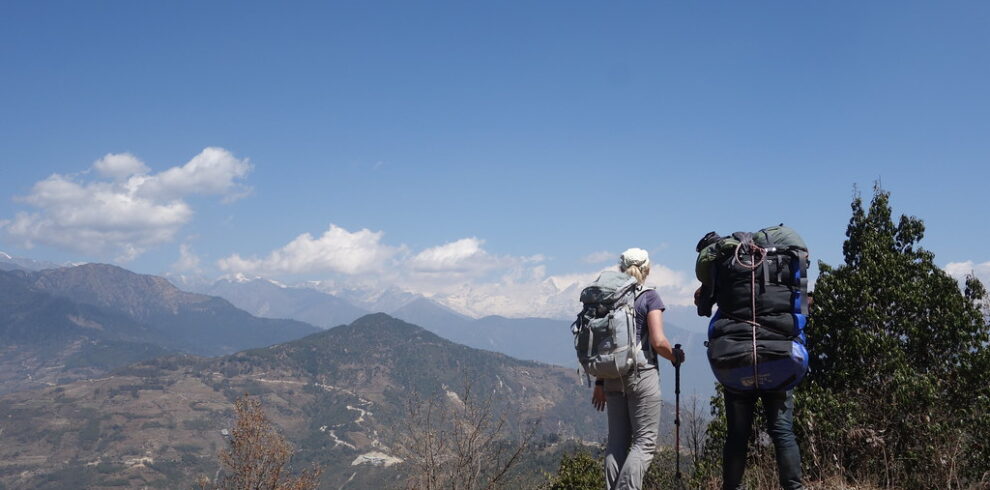
Paldor Peak sits in the Ganesh Himal range northwest of Kathmandu, and it earns its reputation as one of Nepal’s most rewarding trekking peaks precisely because the approach is as impressive as the summit itself. You walk through villages where the pace of life hasn’t changed much in decades, cross suspension bridges over churning glacial rivers, and sleep under skies that feel impossibly wide. It is not a technically extreme climb, but it demands real fitness, solid acclimatization, and a genuine respect for high-mountain conditions.
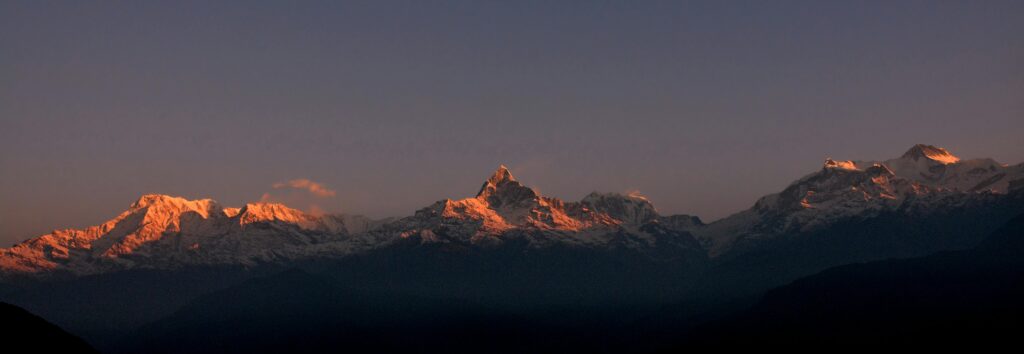
The route passes through Syabrubesi, a quiet gateway town along the Bhote Koshi river, before climbing into the Langtang region’s lesser-traveled western flank. Along the way you pass through rhododendron and pine forests, yak pastures spread across open ridges, and stone teahouses where butter tea is the default welcome. The closer you get to base camp, the more the landscape strips down to bare rock, ice, and sky. The summit view sweeps across the Langtang range, Ganesh Himal peaks, and on a clear morning, distant Himalayan giants to the east and west.
Nepal Holiday Treks designed this 15-day itinerary with deliberate pacing, building in the rest and acclimatization days that make the difference between a summit attempt and a successful one. Whether you are stepping onto a Himalayan peak for the first time or adding Paldor to a longer list, the experience is one that stays with you long after the cold has left your fingers.
Trip Highlights
- Ganesh Himal range
- Highest trekking peak in Nepal
- Langtang region's
- Remote and less crowded trekking route
- Gradual acclimatization for safety
- Climbing training included
- Glacier walking experience
- Cultural experience in traditional Himalayan villages
Itinerary
You land at Tribhuvan International Airport and get your first real look at Kathmandu — a city that hums with noise, colour, and constant movement. From the airport, your guide transfers you to the hotel in Thamel, the tourist hub where narrow lanes are lined with gear shops, bakeries, and small restaurants spilling into the street. The afternoon is yours to recover from the flight, change currency, and pick up any last-minute trekking supplies. In the evening, the team from Nepal Holiday Treks holds a full pre-trip briefing where the itinerary, gear checklist, and summit strategy are covered in detail. This is a good moment to ask every question you have been sitting on. Dinner at a local restaurant gives you your first taste of Nepali dal bhat, and the city outside carries on well into the night.
The drive out of Kathmandu takes you northwest along the Trishuli river, and within an hour the city gives way to terraced hillsides, roadside tea stalls, and small market towns. The road narrows as it climbs into the foothills, and you start seeing the first real Himalayan ridges in the distance. Syabrubesi itself sits at the confluence of the Bhote Koshi and Langtang rivers, a small but lively town where trekkers, local traders, and Tamang villagers all share the same dusty main street. Stone and timber guesthouses line the river, and the sound of rushing water is constant. After the long drive, a short walk along the riverbank helps loosen the legs. The evening sky above the valley turns deep orange before the cold sets in, and that view alone sets the tone for what is ahead.
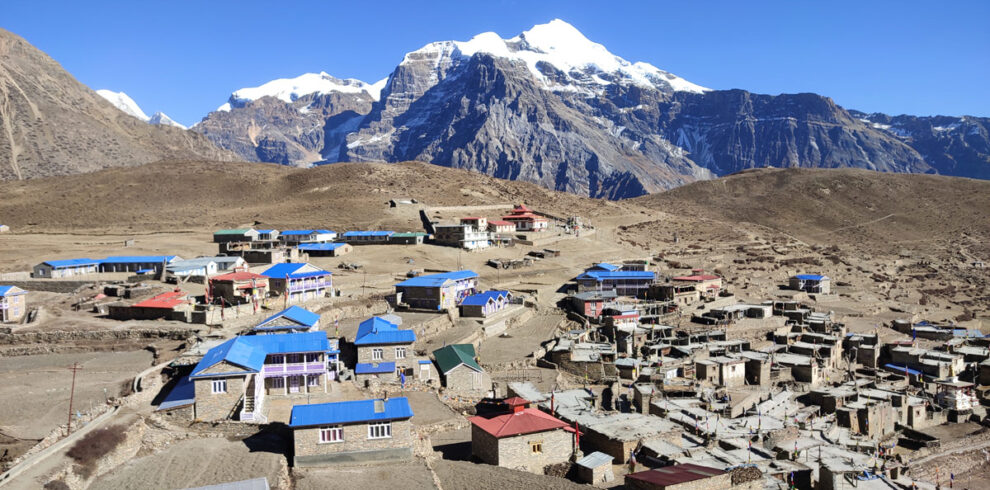
The trail out of Syabrubesi climbs steadily from the moment you leave town, switchbacking through mixed forest where you catch filtered views of the river valley below. Gatlang is a traditional Tamang village, one of the most intact in this region, and arriving here feels genuinely different from the more trekked Langtang valley routes. The village sits on an open terrace with a large white chorten at its centre and hand-carved mani walls that follow the old trade paths. Houses are built from slate and timber in the Tibetan style, with flat roofs used to dry grain and chilies in the sun. The local people are warm and accustomed to trekkers passing through, but the village has not been overrun. A walk through the lanes before dinner gives you a real sense of daily life at this elevation.
Leaving Gatlang, the trail passes through upper pastureland where yaks graze freely and the villages thin out quickly. The path is less defined in places, and you follow ridgelines where the wind picks up and the views open into the broader Ganesh Himal range. Parbati Kunda is a sacred glacial lake, small but perfectly still on calm mornings, reflecting the rock walls and snow patches surrounding it. The approach to the lake is gradual but relentless, and the final stretch involves picking your way over boulders and loose scree. Locals make annual pilgrimage here, and you may find small offering stones and prayer flags arranged near the water’s edge. The campsite nearby is simple, exposed to wind, and strikingly quiet after the trail noise of the day. Sleeping under an open sky at this altitude, with the lake just below you, is the kind of experience that is hard to describe accurately.
Today’s route passes through the Somdang valley, which has some historical significance as an area that once supported small copper mining operations. You can still see old workings in the hillsides, and the valley floor holds remnants of that older activity. The trail drops briefly before climbing again toward Khimlung Gompa, a small monastery set against a bare rocky ridge. The gompa is actively maintained by a resident lama, and the interior holds old thangka paintings and butter lamps that burn through most of the day. The silence here is thick and particular, the kind that comes from genuine remoteness rather than simply being far from a city. Ridge views from just above the gompa take in the Paldor massif clearly for the first time, and most climbers stop here to study the upper route ahead. It is a useful moment of preparation, both mentally and logistically.
The trail to base camp gains significant ground quickly after Khimlung, moving through the last sparse vegetation before the landscape becomes entirely rock and glacier. You pass over moraines where the footing is unstable and requires careful attention, especially with a loaded pack. Base camp sits on a flat glacial shelf with clear sightlines to the summit pyramid and the surrounding ridges. Setting up camp here is a process your team handles efficiently, and by midday the tents are pitched, the kitchen shelter is running, and the atmosphere shifts from trekking to climbing. The afternoon is reserved for rest, gear checks, and a short acclimatization walk above camp to help your body register the altitude. The summit looks close from base camp, but the distance is deceptive in mountain terrain. Clear evenings here reveal a sky full of stars you simply cannot see from any city.
Rest days on a climbing itinerary are not wasted days. Your body is doing significant work adjusting to reduced oxygen, and today you give it the space to do that. A guided rotation hike up to roughly 5,400 m and back down follows the standard acclimatize-high, sleep-low principle that underpins safe altitude progression. You will likely feel the effects of altitude more clearly on this walk than yesterday, which is normal and useful feedback. The guides use this time to review crampon fitting, ice-axe arrest techniques, and rope procedures with everyone in the group. Back at base camp, the afternoon is for eating well, hydrating consistently, and resting without guilt. The weather window for the summit attempt is also assessed here based on current conditions and the forecast your team has been tracking.
The move to high camp is relatively short in distance but demanding in effort. The trail gains steep ground quickly and crosses a glaciated section where crampons go on and the pace slows to something deliberate and rhythmic. High camp is a narrow ledge cleared of loose rock, barely large enough for the tents but positioned to give direct access to the summit ridge above. The views from here are already extraordinary: a full sweep of the Langtang range, the Tibetan plateau visible on clear days beyond the northern ridges, and the Ganesh Himal peaks arrayed to the west. You arrive early enough to rest before dinner, and the evening meal is simple but calorie-dense in preparation for the night ahead. Most climbers find sleep difficult at high camp, partly from the cold and partly from anticipation. Both are manageable.
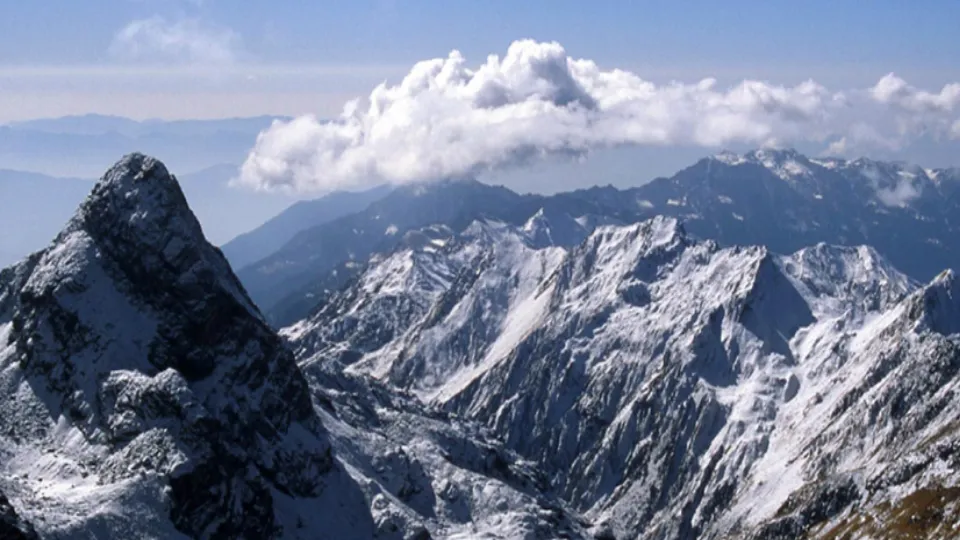
You leave high camp in darkness, headlamps cutting narrow beams across the snow while the stars are still fully out. The air is sharp and still, and the crunch of crampons on hard snow sets the rhythm for the first hour of climbing. The route moves up a steep snow slope to a rocky band, then follows the upper ridge to the summit. Wind picks up near the top and the footing demands full attention, but the technical difficulty remains within reach of a well-prepared trekker. The summit of Paldor Peak delivers a panorama that places you inside the Himalaya rather than looking at it from a distance: Langtang Lirung, Ganesh I, and the whole arc of the range from east to west. Most teams rest on top for no more than 20 minutes before beginning the descent, which requires equal care on the steep sections. Back at base camp by early afternoon, the relief and satisfaction are visible on every face.
Coming down from a summit, the body is tired in a specific way that is different from ordinary trail fatigue. The descent back to Khimlung is long enough to feel it but familiar enough to move at a comfortable pace. The route reverses through the moraine and back into the upper grazing pastures, where the air grows noticeably thicker and warmer with each hundred metres of descent. Small details you missed on the way up become visible now: a marmot colony in the boulder field, a line of prayer flags strung between two rock outcrops, the way the afternoon light hits the valley floor below. Reaching Khimlung feels like crossing back into the inhabited world. Tea is excellent here, the rest is well-earned, and the conversations around the dinner table on summit-night tend to run long and easy.
The return through the Somdang valley moves faster now, with legs that have found their rhythm and lungs that are working comfortably again. The trail back to Gatlang takes a slightly different line in places, offering new angles on terrain you already know. Gatlang itself looks different on the return, or perhaps you look at it differently after a week at altitude. The chorten, the mani walls, the slate rooftops, the children playing near the water tap at the edge of the village. It is the kind of detail that registers more clearly when you are not focused purely on the climb ahead. The guesthouse here is basic but genuinely warm, and the homemade raksi, a local millet spirit, makes an appropriate appearance on summit-night evening number two.
The final day of trail walking brings you back down through the forests to Syabrubesi, the sound of the Bhote Koshi river growing louder as the trees thin out near the valley floor. The descent is steep in places, and trekking poles help protect the knees on the longer switchbacks. Syabrubesi welcomes you with its usual mix of noise and colour, and the prospect of a hot shower and a proper meal sits somewhere between comfort and luxury after the last several days. Nepal Holiday Treks arranges a small celebration dinner for the group here, which is a good tradition. It gives everyone a chance to reflect on the trip together before the drive back to Kathmandu separates people into their own travel plans.
The drive back to Kathmandu follows the same river road you took a week and a half ago, but the landscape reads differently now. The same terraced fields, the same roadside chai shops, the same tight switchbacks above the Trishuli, but your eyes have been recalibrated by ten days of Himalayan scale. The city appears gradually rather than suddenly, urban density creeping in from the valley edges. Back in Thamel, the hotel room feels genuinely luxurious in the simplest ways: a firm mattress, warm water on demand, reliable electricity. The afternoon is free for shopping, visiting Boudhanath or Pashupatinath if energy allows, or simply sitting in a rooftop cafe watching Kathmandu move around you.
Kathmandu rewards slow attention more than rushed sightseeing. This buffer day is practical insurance against any weather delays on the mountain, and on smooth trips it becomes a genuine gift. Swayambhunath, known locally as the Monkey Temple, sits on a hill above the western city with a view over the whole Kathmandu Valley and its ring of hills. Patan, just across the Bagmati river, holds one of the finest medieval squares in Asia, its temples and courtyards still actively used by the people who live around them. Or you do nothing, which after 13 days of movement is its own valid choice. Gear shopping for next time, a good bookshop, a long lunch somewhere quiet. The city provides all of it.
The last morning tends to arrive earlier than expected. Bags packed the night before, a final breakfast, and the transfer to Tribhuvan International Airport where the trip formally closes. What you carry out is harder to quantify than what you carried in: a summit at nearly 5,900 m, ten days of Himalayan trail, a handful of new people who shared the same cold mornings and the same relief on the descent. Paldor is not the highest peak in Nepal, not the most famous, not the most photographed. It is, however, one of the most complete experiences available to a fit and motivated trekker, and most people who climb it leave with a strong and specific reason to come back.
Includes/Excludes
Cost Includes
- Airport pickup & drop
- Professional climbing guide
- climbing permit
- Trekking permits
- Accommodation during the trek
- Tented camp at Base Camp
- All meals during the trek
- Climbing training
- Safety equipment
- First aid support
- Support staff
Cost Excludes
- International airfare
- Personal climbing gear
- Travel insurance
- Personal expenses
- Tips for guide & porter
- Extra accommodation
- Emergency rescue
FAQs
Paldor is graded as a moderate trekking peak, suitable for fit trekkers with basic mountaineering skills. Prior high-altitude trekking experience is strongly recommended before attempting the summit.
Basic crampon and ice-axe technique is required for the summit push. Your guide will provide on-site training at high camp, but practicing these skills beforehand gives you a real advantage.
Spring (March to May) and autumn (September to November) offer the most stable weather and clearest summit visibility. Winter ascents are possible but demand extra cold-weather preparation.
Yes, you need a Trekking Peak Permit issued by the Nepal Mountaineering Association, along with a Langtang National Park entry permit. Your operator handles both during the booking process.
The trail involves steep ascents, river crossings, and several hours of walking on rocky terrain each day. A consistent cardio training routine in the two to three months before departure makes the approach significantly more manageable.